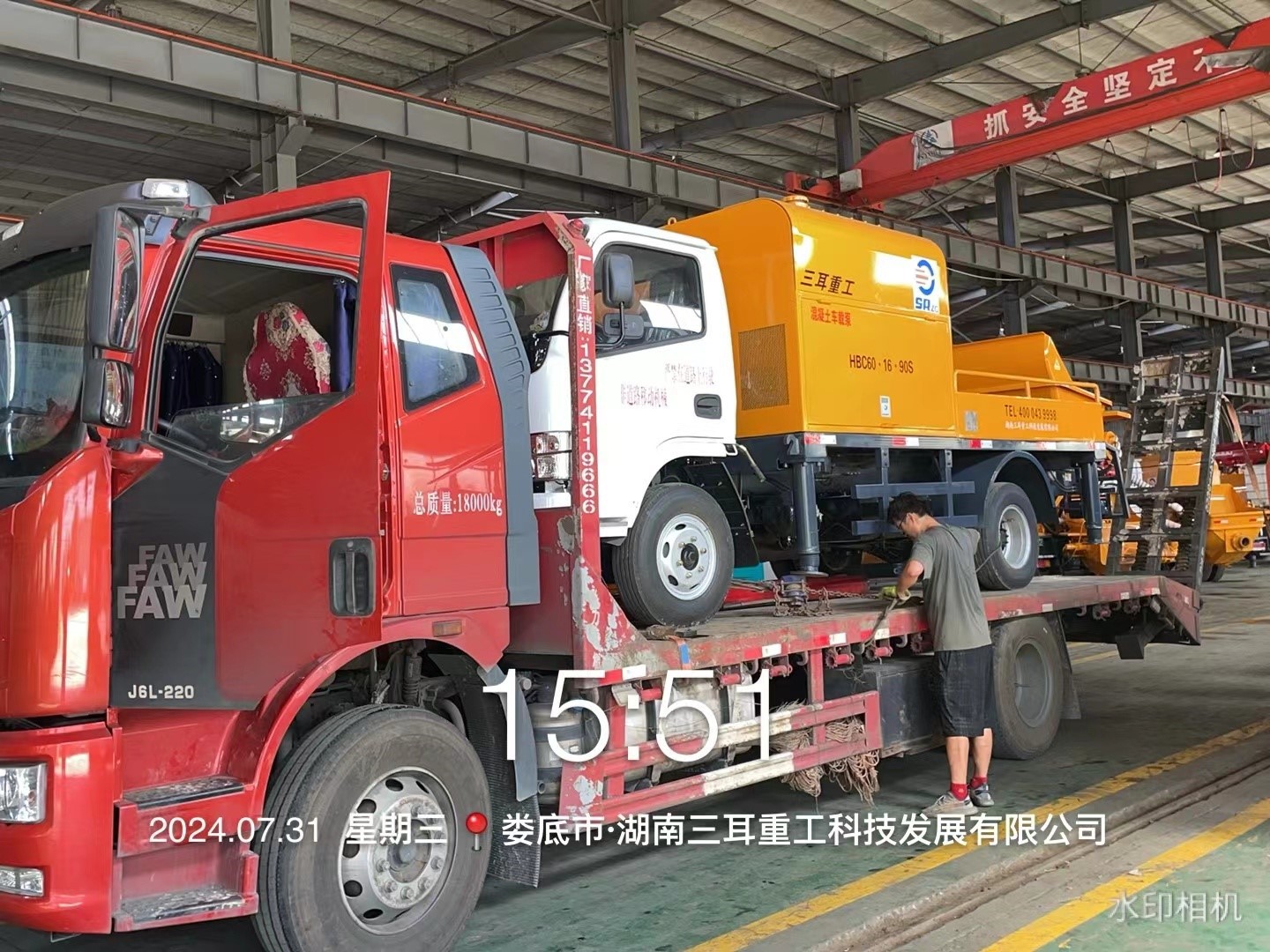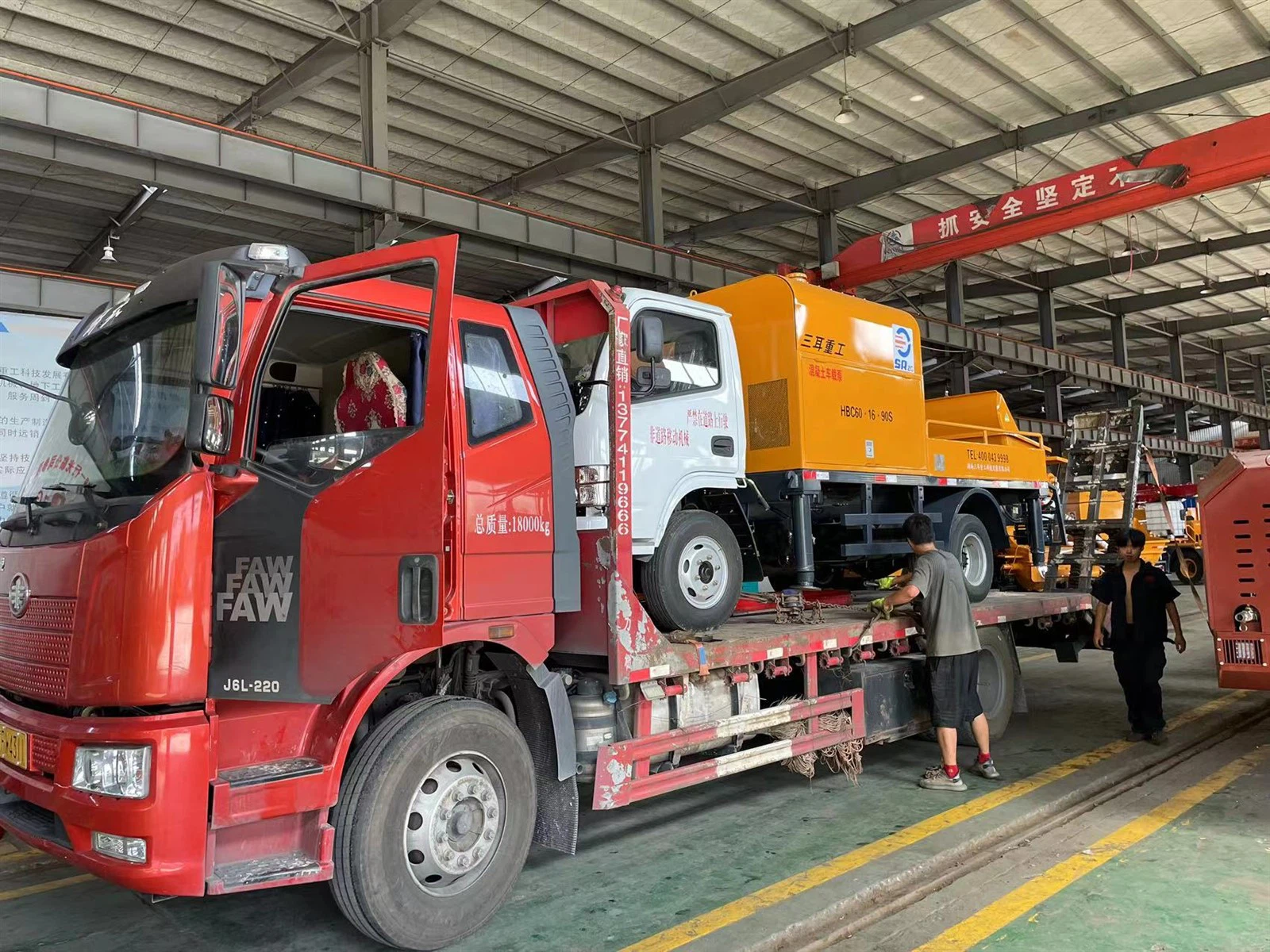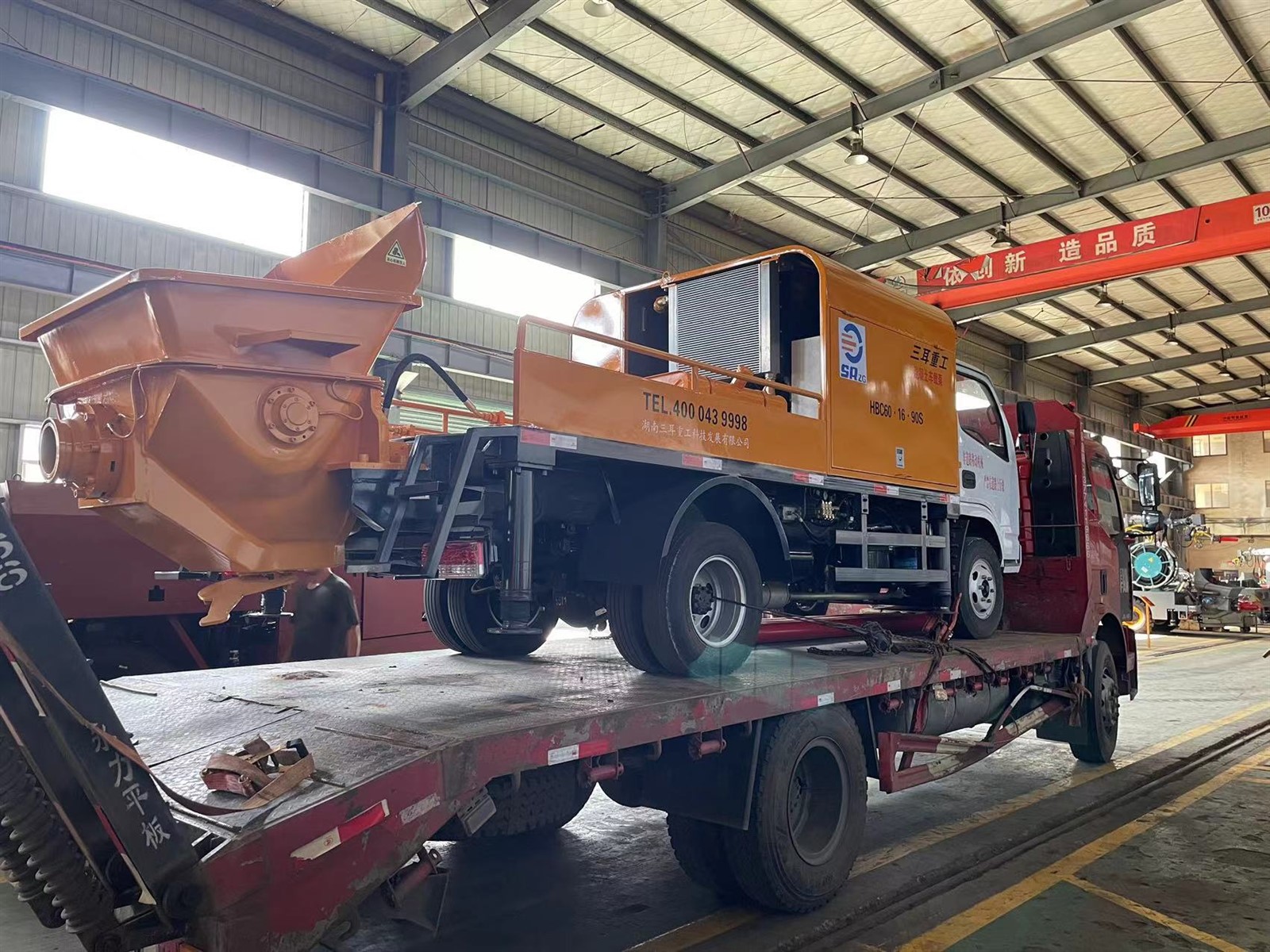
Here are the main types and features:
Types of Concrete Pump Machines
Boom Pumps:
Mounted on trucks and equipped with a robotic arm (boom).
Ideal for large construction projects.
Can reach high-rise buildings and cover large areas.
Line Pumps:
Also known as stationary or trailer-mounted pumps.
Flexible hoses or pipes are manually attached to the pump.
Suitable for smaller projects like sidewalks, swimming pools, and ground slabs.
Features and Benefits
Efficiency: Faster than traditional concrete pouring methods, reducing labor costs and project time.
Precision: Ability to place concrete exactly where needed, minimizing waste.
Reach: Can pump concrete to hard-to-reach areas, making it suitable for complex projects.
Quality: Ensures consistent concrete quality, as it minimizes the risk of segregation and maintains the mix properties.
Considerations for Choosing a Concrete Pump
Project Size and Type: Large-scale projects might require a boom pump, while smaller, more intricate jobs can be handled by line pumps.
Site Accessibility: Consider the ease of access to the site and the specific areas where concrete needs to be placed.
Concrete Mix: Different pumps handle different concrete mixes; ensure compatibility.
Cost: Balance between the cost of renting or purchasing the pump and the project's budget.
Maintenance and Safety
Regular Maintenance: Essential for the longevity and efficient operation of the pump. This includes checking for wear and tear, lubrication, and timely replacement of parts.
Safety Protocols: Operators should be trained in safety procedures, including proper setup, operation, and emergency measures to prevent accidents.
Concrete pump machines are indispensable in modern construction, providing a blend of speed, efficiency, and precision.