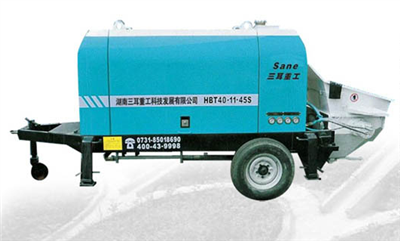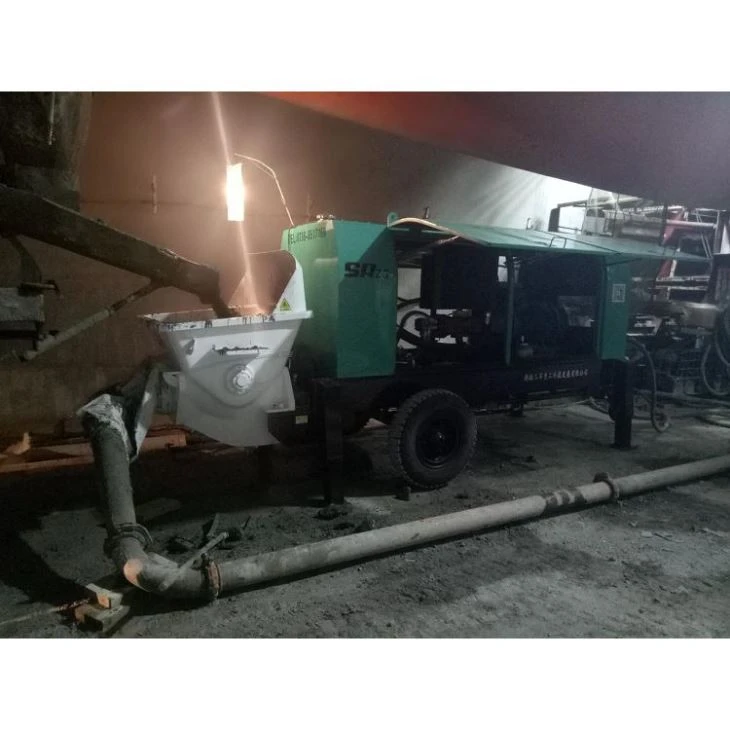
Concrete Pumps

Why Choose Us

Hunan Saner Heavy Industry Technology Development Co.,LTD. was founded in 2010.

Wide Product Range

We mainly produce Rock Drilling Trcuk, Wet Shotcrete Machine, Concrete Pump Machine, Soil Spraying Machine and other products.

Quality Assurance

We have obtained ISO 9001 Quality System and International Multilateral Double Certification. And we have multipy national invention patents.

Perfect After-sales Service Systerm

Follow-up Service after Sale, we could send engineers to serve abroad if there is need. We Direct supply for large enterprises, hospitals, high-speed construction sites and other industries.

Quick Response

Our commitment is to respond to your inquiries within 24 hours, ensuring that you receive the information and support you require in a timely manner.


First 123 Last 1/3
Advantages of Concrete Pumps


Faster Concrete Placement
Concrete pumps are automated and can place concrete at a much faster rate than other methods, reducing the time spent on a project considerably.


Reduced Labor Requirements
Concrete pumps require minimal labor, with only a few operators required to operate the machine, this reduces labor costs significantly, freeing up resources for other aspects of the project.


Improved Concrete Quality
Concrete pumps provide a consistent and high-quality concrete mix, ensuring that the concrete mix is of high quality and uniform throughout the project.


Minimizing Worker Fatigue
Concrete pumps reduce the risk of repetitive strain injuries, which can result from the repetitive motions involved in manual concrete placement, this is particularly important in large-scale construction projects.


Lowering Accident Rates
Concrete pumps reduce the risk of workplace accidents by eliminating the need for workers to handle and transport heavy loads of concrete manually. This reduces the risk of accidents and injuries on the construction site, improving the overall safety of the project.


Improved Site Accessibility
Concrete pumps make it possible to place concrete in hard-to-reach areas, such as high-rise buildings or underground structures. This improves the accessibility of the construction site and reduces the need for additional equipment or labor to access these areas manually.
Moreover, concrete pumps can also be used to place concrete in areas that are difficult to access due to environmental or logistical constraints.


Lower Material Wastage
Concrete pumps can providing a consistent flow of concrete, minimizing the amount of material wasted.


Decreased Project Delays
Concrete pumps speed up the construction process, reducing the time taken to place concrete and allowing for faster completion of the project, this minimizes the risk of delays.


Types of Concrete Pumps
 

Stationary Concrete Pumps
The stationary concrete pumps with free flow hydraulics ensure low heat generation, low fuel consumption, and increased efficiency. The constant flow micro-filtration of the hydraulic oil is enabled by direct high-torque driving on the agitator shaft, ensuring operational reliability and a long service life. The conveniently placed towing hook and toughened frame and axle enable protability across rough terrain. The low weight of the pump allows it to be quickly moved from one site to another. The latest models provide economic solutions for long-distance and high concrete conveyance via concrete lines or concrete distribution systems. These come with completely isolated hydraulic & concrete systems.


Truck-Mounted Boom Concrete Pumps
The series of truck-mounted boom concrete pump models includes customised pipeline that allows the pumps to be better adapted to varying pressure and volume requirements. The boom comes with a remote control system. It can pour large volumes of concrete very quickly. The models provide a steady work pace and higher productivity. The models are equipped with the latest S-valve technology and with highly wear-resistant steel components. Its thick-walled valve construction features exclusive hard-chromed material cylinders and a multi-piece piston cup design. The equipment models are used for high-rise buildings, slabs, columns, bridges and dams.


Trailer Pumps
The models of trailer pumps feature an advanced hydraulic system. It is also equipped with a differential pressure controlled, bi-directional hydraulic system. high efficiency valve system and automatically retracted pistons. Self-diagnosis technology monitors and displays the live pumping parameters. Latest trailer pumps are capable of reducing troubleshooting time through recorded data on the display menu. The engine's automatic adjustments reduce fuel and energy consumption. The trailer pump models are also equipped with efficient pumping systems.


Trail Portable Concrete Pump Crete

Applications of Concrete Pumps


Flat Slabs of Buildings

Concrete pumps can help the construction workers to achieve a smooth layer of concrete basements. It ensures that there are no imperfections in the basement layer.

Basement Concrete

Using boom pumps for basement foundations helps ensure that the basement has been constructed effectively.

Concrete for High-Rise Buildings

Applying concrete to high-rise buildings is a complex task. It is impossible to do the same humanly. Considering the elevation of the high-rise buildings, the concrete pumping solutions work well on the top.

Concrete for Levels

In the parking garage construction, using a concrete pump helps to reach the high levels of the parking garage without any issues.

Concrete for Bridges

Bridges and dams need large and durable concrete layers to handle the intense water pressure. Boom pumps are generally used for the purpose, and concrete is pumped to different parts of the dams and bridges to ensure parity and durability are maintained.


Components of Concrete Pumps


1

Main Pump (Main Cylinder)
The main pump is the core hydraulic cylinder of the concrete pump, responsible for pushing and conveying concrete. It pushes concrete out of the pump through reciprocating motion, controlling the flow direction and volume of concrete to ensure accurate delivery to the target location.

 
2

Distribution Valve
The distribution valve is located in the hydraulic system of the concrete pump, controlling the flow direction and distribution of concrete. It opens or closes as needed to regulate concrete flow, ensuring concrete is delivered to the designated construction location, thus improving construction efficiency and accuracy.

 
3

Concrete Hopper
The concrete hopper is located at the top of the concrete pump, used to store concrete and supply it to the main pump. The hopper's capacity and design can accommodate various construction needs, continuously supplying concrete through conveyors or bucket elevators to the main pump.

 
4

Delivery Pipes and Joints
Delivery pipes and joints connect various concrete pump components, transporting concrete from the pump to the construction site. Typically made of wear-resistant and pressure-resistant materials such as alloy steel or high-density polyethylene, they ensure unobstructed concrete passage and adapt to different construction environments and requirements through various fittings and elbows.

 
5

Electric Motor or Diesel Engine
The electric motor or diesel engine provides power for the concrete pump, driving the hydraulic system and other moving parts. The electric motor is usually mounted above the pump or connected through a transmission device to provide the required power and torque, ensuring the pump's normal operation.

 
6

Hydraulic System
The hydraulic system provides the required pressure and flow, driving the main pump and other hydraulic components. It includes hydraulic cylinders, reservoirs, pumps, and pipes, using hydraulic oil pressure and flow to propel concrete delivery. It adjusts pressure and flow through various valves and control devices to adapt to different construction needs.

 
7

Control Panel and Control System
The control panel and control system monitor and regulate the operation status of the concrete pump, including the hydraulic system, electrical system, etc. They consist of control panels, sensors, switches, and other components, ensuring the safe, stable, and efficient operation of the concrete pump. By monitoring and adjusting system parameters, they achieve automation and intelligence in the concrete delivery process.

 
8

Valves and Switches
Valves and switches control the operation status and functions of various concrete pump parts for sale, including hydraulic valves, inlet valves, outlet valves, etc. They ensure the coordinated operation of various concrete pump components to achieve the desired delivery effect, ensuring the safety and stability of the construction process through timely adjustment and operation.


How to Operate a Concrete Pump Safely


Plan Ahead to Avoid Work Site Placement Issues

The first step on your concrete pump safety checklist should be to plan ahead and ensure the pump can be safely placed where it needs to be to get the job done. You want your machine to be somewhere convenient for pumping and accessible for the mixing trucks, but you also want to make sure your pump is somewhere safe.
If you don't plan ahead, concrete pumps with booms are at risk of coming into contact with power lines on your work site, which could result in dangerous electric shock.

Inspect Your Equipment to Prevent Malfunctions

Concrete pumps that have not been properly maintained or inspected could malfunction during use and injure crew members. Additionally, safety straps that are weak and worn may also break or malfunction.
The easiest way to prevent these pumping hazards is to perform inspections and preventive maintenance to your concrete pump and safety gear. If you are renting a machine, make sure the rental service has provided the proper inspection information.

Understand the Dangers of Wet Concrete

Wet concrete is abrasive and contains harmful chemicals that can cause caustic burns, abrasions, dermatitis and other irritations when they contact the eyes or skin. Wear long sleeves, long pants and all proper protective equipment when working with wet concrete and avoid any direct contact with the wet materials.

Know Standard Operating Procedures

When you know how to operate your concrete pump properly, you can run it safely and avoid costly mistakes on the job.
Things like proper handling of the hose, using the correct hose fixtures and wearing proper ear protection can prevent injuries to your crewmembers.

Stay Up to Date With Safety Training

Before you begin a project with a concrete pump, make sure you are caught up on the most recent safety regulations for operating the machine. Ensure your team has any necessary training and certifications for operating concrete pumps and a full understanding of concrete pump hazards and safety.
Proper training and planning are the best ways to prevent accidental injuries on your work site.


Basic Do's And Don'ts of Concrete Pump Safety

You and your crew should understand the do's and don'ts of working with a concrete pump to prevent damages, injuries and potential death.


Certificate


page-800-600
page-800-600
page-800-600
page-800-600
page-800-600
page-800-600
page-800-600
page-800-600
page-800-600
page-800-600
page-800-600
page-800-600


Frequently Asked Questions


Q: Can concrete pumps be used in cold weather?

A: Yes, but cold weather may require additives to prevent freezing, and the pump should be kept warm and clean to ensure smooth flow in low temperatures.

Q: How does a concrete pump work?

A: Concrete pumps use a piston-driven or hydraulic system to push concrete through pipes and hoses, allowing it to be directed precisely at the site, such as for high-rise buildings, foundations, or large concrete slabs.

Q: What types of concrete pumps are available?

A: There are two main types: boom pumps (truck-mounted with a robotic arm for precise placement) and line pumps (trailer-mounted, used for smaller projects and flexible placement).

Q: What are the main advantages of using a concrete pump?

A: Concrete pumps reduce labor, increase placement speed, improve precision, reduce waste, and allow concrete to reach inaccessible or elevated locations, improving efficiency in large projects.

Q: How far can a concrete pump deliver concrete?

A: Pump range depends on the model. Line pumps can deliver up to 150 meters (492 feet), while boom pumps can reach heights of 70 meters (230 feet) or more, making them suitable for high-rise buildings.

Q: What is the difference between a line pump and a boom pump?

A: A line pump uses flexible hoses, ideal for ground-level or short-distance pumping. A boom pump has an extendable arm (boom) that reaches high or complex locations, ideal for large or elevated structures.

Q: What are typical applications for a concrete pump?

A: Concrete pumps are commonly used for foundations, walls, high-rise buildings, bridge piers, swimming pools, tunnels, and other areas where direct pouring is challenging or impractical.

Q: How much concrete can a pump handle per hour?

A: Concrete pumps vary by model, with many handling between 30-150 cubic meters per hour, making them efficient for large-scale construction projects.

Q: What are the power options for concrete pumps?

A: Concrete pumps are typically powered by diesel or electricity. Diesel pumps are popular for remote or outdoor sites, while electric pumps are quieter and suitable for indoor projects with electricity access.

Q: How do you choose the right concrete pump for a project?

A: Selecting a pump depends on project scope, concrete volume, height and distance to be covered, and site access. Boom pumps are ideal for tall structures, while line pumps suit smaller or ground-level jobs.

Q: What is the typical lifespan of a concrete pump?

A: With proper maintenance, concrete pumps can last 10-15 years, depending on usage intensity, site conditions, and adherence to maintenance schedules.

Q: Can concrete pumps handle all types of concrete?

A: Concrete pumps work best with consistent, well-mixed concrete of suitable viscosity. Aggregates should not exceed the pump's specified size to prevent clogs and maintain smooth operation.

Q: What safety precautions should be taken when using a concrete pump?

A: Safety precautions include securing the pump setup, maintaining a clear zone around the pump, wearing protective gear, and following the manufacturer's safety protocols to prevent accidents.

Q: What is the role of the boom in a boom pump?

A: The boom is an extendable, articulated arm that positions the hose accurately at the desired pouring location. It provides control over the placement of concrete, especially at heights or in tight spaces.

Q: How is concrete flow rate controlled in a concrete pump?

A: The flow rate is controlled by adjusting the pump's speed, as well as by the operator's control over the hose or boom, to deliver the desired concrete volume efficiently.

As one of the leading concrete pumps manufacturers and suppliers in China, we warmly welcome you to buy cost-efficient concrete pumps for sale here from our factory. All our products are with high quality and competitive price.Trailer Mounted Concrete Pump, Ready Mix Concrete Pump, Largest Concrete Pump

whatsapp

skype

E-mail

Inquiry