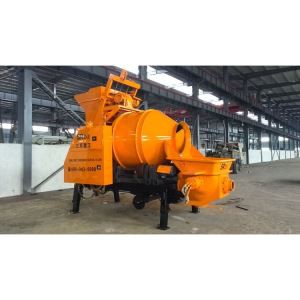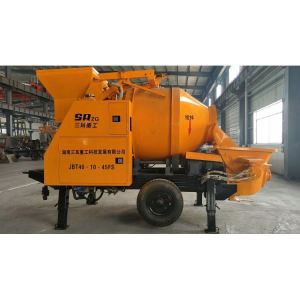
Concrete Mixers
Why Choose Us
Hunan Saner Heavy Industry Technology Development Co.,LTD. was founded in 2010. We supply a wide range of products, as concrete pump, tunnel wet concrete sprayer machines, mortar spraying machines, concrete conveyor pump, concrete mixer and pump machines, soil hydro seeding machines.
Wide Product Range
We mainly produce Rock Drilling Trcuk, Wet Shotcrete Machine, Concrete Pump Machine, Soil Spraying Machine and other products.
Quality Assurance
We have obtained ISO 9001 Quality System and International Multilateral Double Certification. And we have multipy national invention patents.
Perfect After-sales Service Systerm
Follow-up Service after Sale, we could send engineers to serve abroad if there is need. We Direct supply for large enterprises, hospitals, high-speed construction sites and other industries.
Quick Response
Our commitment is to respond to your inquiries within 24 hours, ensuring that you receive the information and support you require in a timely manner.
Advantages of Concrete Mixers
Increased Efficiency and Productivity
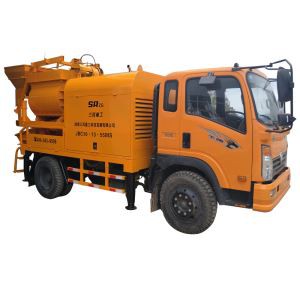
By being able to mix concrete on-site, you eliminate the need for time-consuming transportation and storage of pre-mixed concrete. Additionally, a mobile concrete mixer allows you to mix the exact amount of concrete needed for each task, eliminating waste and optimizing resource allocation.
Cost Savings and Reduced Waste
By eliminating the need for pre-mixed concrete, you eliminate transportation costs, storage fees, and the risk of concrete spoilage. With a mobile concrete mixer, you have complete control over the amount of concrete you mix, which means that you only mix what you need.
Flexibility and Convenience on Construction Sites
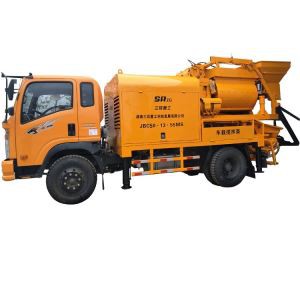
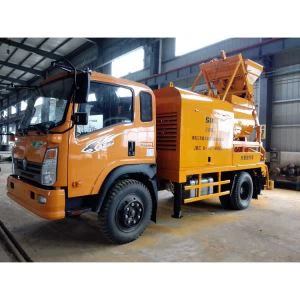
A mobile concrete mixer offers unparalleled flexibility by allowing you to mix concrete on-site. With a compact and portable design, these mixers can easily navigate tight spaces and access hard-to-reach areas on your construction site.
Improved Quality Control and Consistency
With a mobile mixer, you have complete control over the mix design, allowing you to adjust it to your precise specifications. With a consistently mixed concrete, you can eliminate variations in strength and appearance, ensuring a uniform finish throughout your project.
Environmental Benefits
By mixing concrete on-site, you minimize the waste associated with pre-mixed concrete, reducing the environmental impact of your construction projects. Mobile concrete mixer eliminates the need for transportation of pre-mixed concrete, which in turn reduces carbon emissions and energy consumption.
Versatility
These mixers are designed to mix various types of concrete, including regular concrete, high-strength concrete, and specialty mixes. Additionally, a mobile concrete mixer can be easily transported between different construction sites, making it a cost-effective solution for contractors working on multiple projects.
Types of Concrete Mixers
Tilting Drum Mixer
Tilting Drum Mixers are designed with a tilting drum that can be rotated to pour out the mixed concrete or cement, making them a popular choice for construction projects where material needs to be quickly unloaded. These mixers consist of a drum tilted on its axis allowing the mixed material to be poured out of the drum into a designated area
Non-Tilting Drum Mixer
Non-Tilting Drum mixers do not have a tilting mechanism and rely on manual labour to unload the mixed material.


Reversing Drum Mixer
A reversing drum mixer's drum can rotate in both directions, allowing the mixing blades to effectively mix the material. The drum has mixing blades or fins attached to the inside of the drum to help mix the material.
Continuous Mixer
Continuous Mixers, also known as continuous flow mixers, are a type of mixer used in the construction industry to mix concrete or other construction materials. Unlike batch mixers, which mix a set amount of material at a time, this cement mixer mixes materials continuously as they move through the mixing chamber. The material is continuously fed into the mixing chamber at one end, while the mixed material is continuously discharged from the other end.
Applications of Concrete Mixers

Construction

Government Sector

Prefabricated Structures
Concrete Mixers Usage Precautions
Electricity and Power Requirements
Concrete mixers require power to operate, which can be supplied by an onboard engine or through an external electric source. The voltage requirements can vary depending on the mixer's size and design.
Mobility and Transportation
Many mixers are fixed installations, while others are mounted on wheels, axles, and can be transported to and from job sites. Large projects might use stationary mixers, while portable mixers are commonly used for small to medium tasks.
Concrete Mixer Operations
Concrete mixers are pivotal in the construction process, providing a consistent and efficient means of combining cement, aggregates, sand, and water to produce concrete. The operations of a concrete mixer involve a series of systematic procedures aimed at ensuring the quality and uniformity of the concrete mix.
Mixing Process
The mixing process in a concrete mixer is initiated by adding cement, aggregates, and sand to the drum, while water is introduced to reach the desired consistency. Batch concrete mixers involve a set duration of mixing, typically 3-5 minutes, to produce concrete in batches.
Loading and Unloading Mechanisms
For loading, concrete mixers may use gravity or screw feeders to transfer materials into the mixing drum. The chute is a common unloading mechanism, which relies on gravity to guide the ready concrete mix from the drum to its destination.
Larger commercial mixers may employ hydraulic systems for both loading and unloading to handle greater volumes.
Control Systems
The control systems in concrete mixers are crucial for precision and efficiency. Operators input data into the mixer to oversee the quantities of materials and the mixing time. In more advanced mixers, computerized controls ensure the concrete is mixed homogeneously to the exact specifications required.
Cleaning and Maintenance
After each use, the mixer must be cleaned to prevent concrete from hardening within the drum and on the blades. This often involves running the mixer with water and a cleaning agent.
Regular maintenance also includes inspecting mixers for wear on blades and ensuring that all moving parts are lubricated to prevent breakdowns.
Safety Precautions
During operation, it's essential to adhere to stringent safety precautions to prevent accidents.
Operators should wear appropriate protective gear, and all safety guards and emergency stop mechanisms should be checked regularly.
Drum and Drum Parts
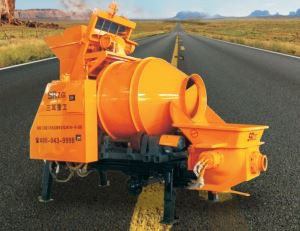
The drum is at the center of a concrete mixer. It is used to properly blend the ingredients. The important parts include the drum itself, mixing blades, fins, and any necessary seals or bearings.
Motors and Engines
They power the rotation of the mixer drum and drive the mixing process. Some needed aspects to consider when looking for motor and engine parts are the fuel they require and the power they can produce.
They should be compatible with the mixer model. For motors and engines to perform at their best, you should ensure proper care and maintenance.
Mixing Blades and Paddles
If you want the mixing of the concrete ingredients to be done thoroughly and uniformly, this is where mixing blades and paddles play their part. These components are available in different designs and shapes so that they can meet various mixer types and mixing needs.
Hydraulic Systems
The movement of the mixer drum and the rotation and tilting for discharging the concrete are controlled by the hydraulic systems. The usual components of hydraulic systems are valves, pumps, cylinders, and hoses, as they are needed to make the operation go smoothly.
Electrical Components
Electrical components like switches, wiring, and control panels, govern the mixer's electrical functions. These parts are essential to enable the efficient and safe running of the mixer. Electrical components control the startup of the motor, rotation of the drum, and other functions.
Other Essential Parts
These include frames, bearings, axles, tires, and water systems, depending on the mixer type and configuration. Frames provide structural support and stability to the mixer, while axles and tires facilitate mobility on construction sites.
Certificate


Frequently Asked Questions