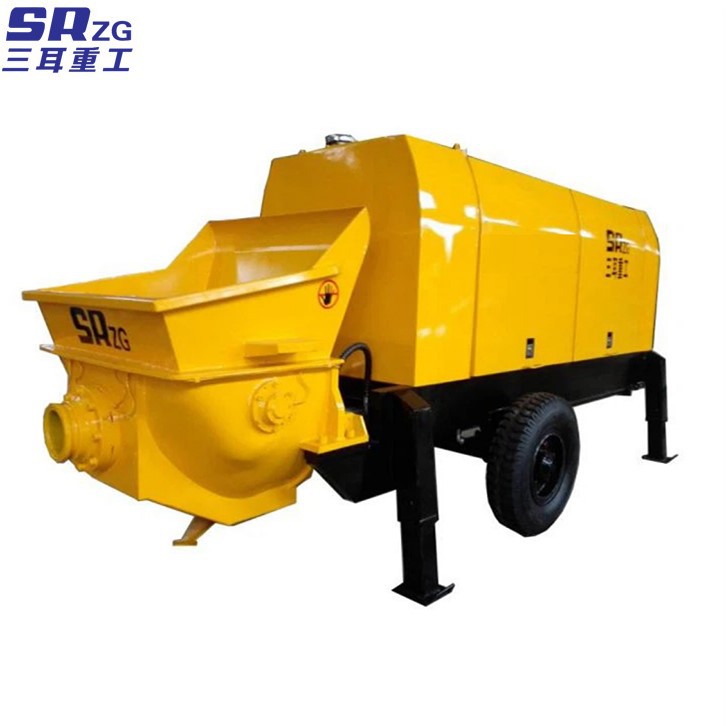
Concrete line pumps are equipment used in construction to transport and pour concrete efficiently. There are various types of concrete line pumps, each designed for specific applications and project requirements. Some common types include:
Trailer-Mounted Concrete Pumps:
Truck-Mounted Line Pumps: These are commonly mounted on a truck or trailer, providing mobility and ease of transportation to different job sites. They are versatile and suitable for a wide range of projects.
Trailer-Mounted Concrete Pumps: These pumps are mounted on a trailer, making them easy to tow and maneuver on construction sites. They are often used for smaller projects or in areas where a truck-mounted pump might face challenges.
Stationary Concrete Pumps:
Stationary Line Pumps: These pumps are fixed in a specific location and are ideal for projects with a consistent pouring area. They are often used for large construction projects or in situations where mobility is not a primary concern.
Boom Pumps:
Truck-Mounted Boom Pumps: These pumps have a robotic arm (boom) that can extend and reach difficult-to-access areas. They are suitable for large construction projects where precise concrete placement is required.
Trailer-Mounted Boom Pumps: Similar to truck-mounted boom pumps, these are mounted on trailers, providing more flexibility in terms of mobility. They are used for projects that require both mobility and reach.
Specialized Line Pumps:
High-Pressure Line Pumps: These pumps are designed to handle high-pressure concrete pumping, making them suitable for projects that require pumping concrete over long distances or to higher elevations.
Squeeze-Type Concrete Pumps: Also known as peristaltic or squeeze hose pumps, these pumps use a rotating roller to compress a flexible hose, pushing the concrete through the delivery line. They are often used for pumping specialized mixes, such as shotcrete or low-slump concrete.
Trailer-Mounted Electric Pumps:
Electric Line Pumps: These pumps are powered by electricity, making them suitable for indoor or enclosed construction sites where emissions from diesel engines may be a concern.