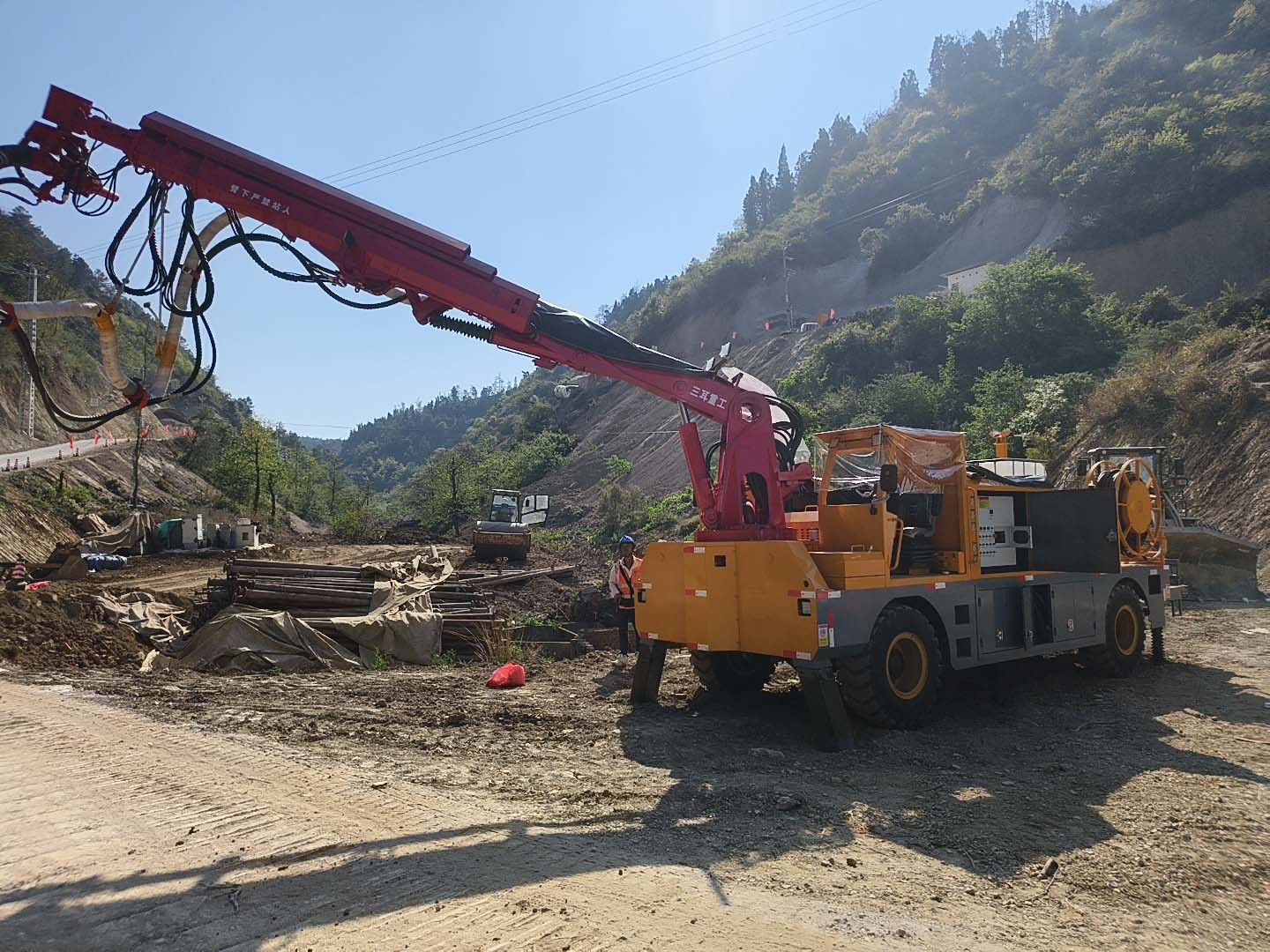
⚙️ How the Process Works
The system uses a pre-mixed concrete that is pumped to the nozzle and then projected onto the tunnel wall.
Wet Mix vs. Dry Mix: This method uses a wet-mix process, where all ingredients (cement, aggregates, water) are pre-mixed before being fed into the machine. This is different from the older dry-mix method, where water is added at the nozzle. The wet-mix process is preferred for its consistent quality, lower dust, and reduced material waste (rebound).
Key Components in Action:
Concrete Pump: Delivers the wet concrete mix through a hose to the spray nozzle .
Air Compressor: Provides high-pressure air at the nozzle to propel the concrete onto the surface at high velocity, ensuring it compacts and adheres well.
Accelerator System: This is critical for tunnel work. It injects a liquid or powder accelerator (set-accelerating admixture) into the concrete stream right at the nozzle. This chemical makes the concrete set and harden in minutes, allowing it to stick to vertical surfaces and overhead tunnel ceilings without sagging or falling.
Robotic Arm (Manipulator): The spray nozzle is mounted on a long, articulated, and highly flexible robotic arm. The operator uses a wireless remote control to precisely guide the nozzle, ensuring even coverage over the curved tunnel surface, from the floor to the crown.
🎯 The Spraying Technique
Achieving a high-quality, uniform layer requires a specific technique.
Layered Approach: The concrete is not applied in one thick layer. Instead, a systematic, multi-layer method is used to ensure stability and proper thickness. A typical sequence involves :
Rock Surface Layer: A thin layer is first sprayed to fill in any small pits and irregularities on the excavated rock surface.
Bottom Layer: Sprayed to cover the area behind and around any steel support arches.
Core Layer: Applied to fill the space between the steel arches, building up the main thickness of the support.
Leveling Layer: A final layer, typically about 3 cm thick, is sprayed to create a smooth, even final surface.
Operator Best Practices: To minimize rebound (concrete that bounces off and falls to the floor) and ensure good adhesion, the operator follows key rules:
Maintains a spray distance of 1.0 to 1.5 meters from the surface.
Keeps the nozzle perpendicular (90-degree angle) to the tunnel wall.
Sprays systematically, moving from the bottom to the top and from the edges to the center of the work area.
✅ Why This Process is Essential for Tunneling
This operation is a vital and immediate step right after tunnel excavation, serving several critical purposes:
Immediate Ground Support: The quickly setting concrete stabilizes the freshly exposed rock, preventing loose fragments from falling and controlling groundwater seepage, which is crucial for worker safety.
Forms the Initial Lining: This sprayed concrete layer acts as the tunnel's primary support system or initial lining, creating a stable structure for any future, permanent concrete lining.
High Efficiency and Adaptability: Robotic systems allow for rapid, 24/7 operation with high placement rates (e.g., 4–30 m³ per hour -5), adapting easily to the complex, curved shapes of a tunnel
.
This process is typically the second step in a continuous cycle of tunnel construction. After the rock face is excavated, the shotcrete is applied, and once it has gained enough strength (often within minutes to hours), rock drilling machines can re-enter to drill holes for the next blast or for installing rock bolts.