



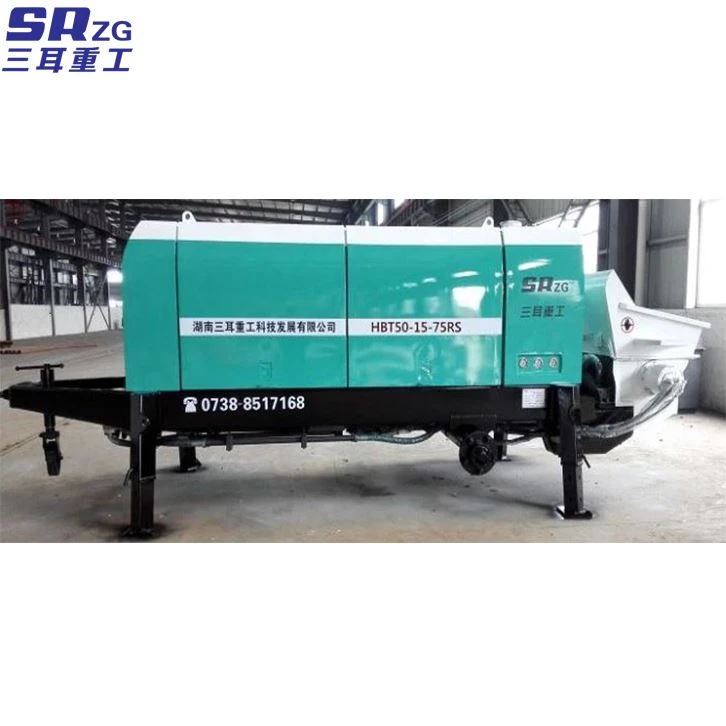


Concrete Injection Equipment
Concrete injection equipment
Item-best spray paint for concrete,concrete stucco sprayer,concrete injection equipment
With the national mine roadway, railway and highway tunnels, water conservancy culverts, underground engineering and other construction, extensive use of the anchor anchor support the international advanced support method, the concrete jet is the main equipment of the operation, but because of Dry spray machine there are polluted environment problems
the country is vigorously promoting the wet wet spray machine, with low dust, low resilience, high construction efficiency, the use of low cost advantages.
Product parameter(specification)
| Max theoretic output | 50m³/h | |||||
| Max concrete pumping pressure | 15Mpa | |||||
| High and low valtage switchover | Yes | |||||
| Hydraulic system | Double pump & double circuit opening | |||||
| Main oil pump discharge | 260ml/r(kawasaki) | |||||
| Hydraulic system pressure | 32Mpa | |||||
| Power supply | Electric motor | |||||
| Voltage | 380V | |||||
| Motor power | 75KW | |||||
| Motor speed | 1475r/min | |||||
| Distribution valve type | S pipe valve | |||||
| Concrete conveying cylinder bore/stroke | Ф200/1650mm | |||||
| Oil cylinder bore/stroke | Ф125/1650mm | |||||
| Max aggregate size | 40mm | |||||
| Hopper Volume | 0.6m³ | |||||
| Feeding height | 1450mm | |||||
| Max delivery vertical distance | 150m | |||||
| Max delivery horizontal distance | 450m | |||||
| Concrete slump | 160-230mm | |||||
| Hydraulic oil tank volume | 420L | |||||
| The radiator cooling type | Air cooling system | |||||
| Hydraulic pump type | Ram pump | |||||
| Outer dimensions(L*W*H) | 5600*2150*3000mm | |||||
| Total weight | 5500kg | |||||
Product application:


Product details:


Here's an overview of concrete injection equipment, including its features, advantages, applications, and operational considerations:
Features of Concrete Injection Equipment
Injection Pumps:
High-pressure pumps capable of delivering concrete or grout into tight spaces.
Common types include piston pumps, diaphragm pumps, and progressive cavity pumps.
Mixing Units:
Integrated mixers that ensure the concrete or grout mixture is homogeneous before injection.
Can handle a variety of materials, including cement-based grouts, epoxy resins, and polyurethane foams.
Hoses and Nozzles:
Durable, flexible hoses that can withstand high pressures and facilitate precise injection.
Various nozzles designed for specific injection applications and material types.
Control Systems:
Advanced control panels for adjusting injection pressure, flow rate, and other parameters.
Some models feature remote control capabilities for enhanced operator convenience and safety.
Portability:
Compact and mobile designs for easy transportation and maneuverability around the job site.
Often mounted on wheeled frames or portable skids.
Power Source:
Available in electric, diesel, and pneumatic models, providing flexibility based on site requirements.
Diesel models are ideal for remote locations without reliable electricity.
Advantages of Concrete Injection Equipment
Efficient Repairs:
Enables quick and effective repair of cracks and voids, restoring structural integrity.
Reduces downtime and labor costs compared to traditional repair methods.
Improved Durability:
Injected materials bond well with existing concrete, enhancing the structure's strength and durability.
Provides long-lasting repairs that prevent further deterioration.
Versatility:
Suitable for a wide range of applications, including crack repair, void filling, and soil stabilization.
Can handle various injection materials, making it adaptable to different repair needs.
Precision and Control:
Allows for precise control over the injection process, ensuring complete filling of cracks and voids.
Minimizes waste and ensures optimal material usage.
Enhanced Safety:
Reduces the need for extensive demolition and reconstruction, minimizing risks to workers.
Designed to operate efficiently in confined and hard-to-reach spaces.
Applications of Concrete Injection Equipment
Crack Repair:
Ideal for sealing and repairing cracks in concrete structures such as walls, floors, and foundations.
Prevents water ingress, corrosion, and further structural damage.
Void Filling:
Used to fill voids and cavities in concrete and masonry structures, enhancing stability and load-bearing capacity.
Commonly applied in bridges, tunnels, dams, and retaining walls.
Structural Strengthening:
Injects materials that reinforce and strengthen weakened or damaged concrete elements.
Enhances the structural integrity of buildings and infrastructure.
Leak Sealing:
Effective for sealing leaks in concrete structures, such as water tanks, basements, and underground facilities.
Prevents water infiltration and subsequent damage.
Soil Stabilization:
Used for injecting stabilizing materials into loose or unstable soil to improve its load-bearing properties.
Essential for foundation repair and ground improvement projects.
Operational Considerations
Material Compatibility:
Ensure the injection material is compatible with the pump and the structure being repaired.
Properly mix and prepare the material to avoid clogs and ensure effective bonding.
Maintenance:
Regular maintenance and cleaning of the equipment and its components are crucial for reliable operation.
Inspect hoses, nozzles, and pumps frequently to prevent wear and tear.
Operator Training:
Proper training on the use and safety protocols of the equipment is essential.
Operators should understand how to adjust settings and troubleshoot common issues.
Site Preparation:
Ensure the job site is ready for injection, including cleaning and prepping the injection area.
Plan the injection process to ensure efficient and effective material delivery.
Safety Considerations:
Follow all safety guidelines and protocols to prevent accidents and injuries.
Use appropriate personal protective equipment (PPE) such as gloves, goggles, and masks.
Conclusion
Concrete injection equipment is vital for efficient and effective repair and strengthening of concrete structures. Its ability to deliver precise and controlled injections of various materials makes it ideal for a wide range of applications, from crack repair and void filling to structural strengthening and leak sealing. By investing in reliable equipment and following best practices for operation and maintenance, construction professionals can achieve superior results, extend the lifespan of structures, and improve overall productivity on their job sites.
Hot Tags: concrete injection equipment, China concrete injection equipment manufacturers, suppliers, factory, concrete injector, Robotic Boom Shotcrete Machine, Wet Shotcrete Machine, , Robot Arm Shotcrete Machine, Vehicular Shotcrete Machine
Previous
Concrete Injector PumpYou Might Also Like


Send Inquiry