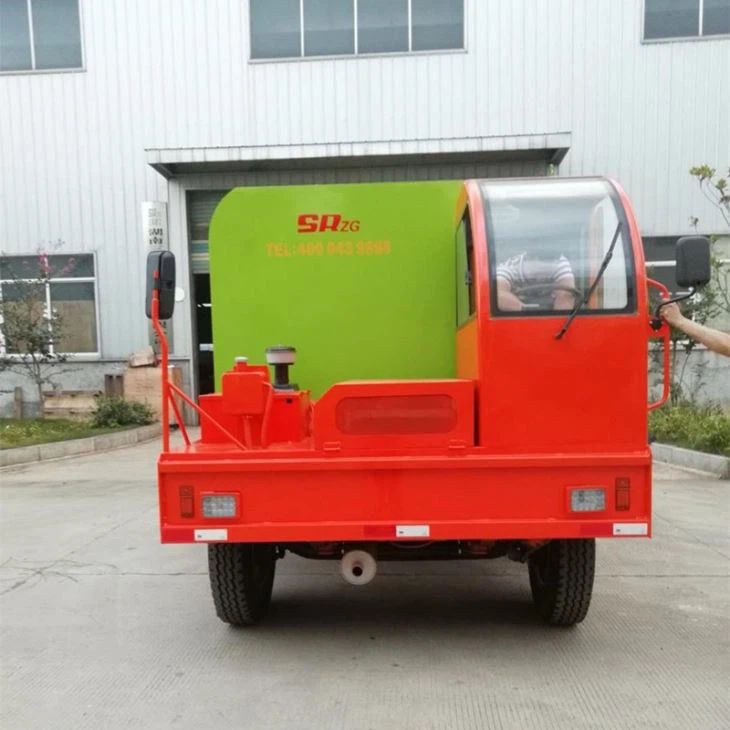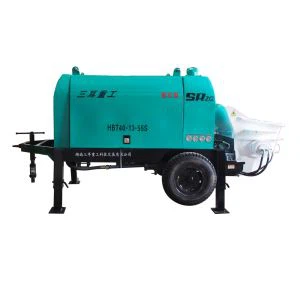
High Pressure Trail Concrete Pump

High Pressure Trail Concrete Pump

A common type of high pressure trail concrete pump for large scale construction projects is known as a boom concrete pump, because it uses a remote-controlled articulating robotic arm (called a boom) to place concrete accurately. It is attached to a truck or a semi-trailer.
Send Inquiry
Product Introduction

Hunan Saner Heavy Industry Technology Development Co.,Ltd.


Hunan Saner Heavy Industry Technology Development Co.,LTD. was founded in 2010, and it is a collection of engineering machinery R&D, production, sales high-tech enterprise. Our factory is located in scenic Sany matching industrial park, state-level economic development zone, Loudi city, Hunan province Where the transportation is convenient, covers an area of 10000 square meters. Currently, we have four branch: Hunan Saner machinery company, Hunan Saner trade company, Hunan Saner maintenance company and Hunan Saner lease company.


MODEL: HBT80-16-110S/162RS
Max theoretic output 80m³/h
Max concrete pumping pressure 16Mpa
High and low valtage switchover Yes
Hydraulic system Double pump & double circuit opening
Main oil pump discharge 260ml/r(kawasaki)
Hydraulic system pressure 32MPa
Power supply Electric motor Diesel motor
Voltage 380V /
Motor power 110KW 162KW
Motor speed 1475r/min
Distribution valve type S pipe valve
Concrete conveying cylinder bore/stroke Ф200/1862mm
Oil cylinder bore/stroke Ф140/1650mm
Max aggregate size 40mm
Hopper Volume 0.80m³
Feeding height 1450mm
Max delivery vertical distance 150m
Max delivery horizontal distance 500m
Concrete slump 160-230mm
Hydraulic oil tank volume 420L
The radiator cooling type Air cooling system
Hydraulic pump type Ram pump
Outer dimensions(L*W*H) 6450*1900*2330mm
Total weight 6100kg


Why Choose Us

Quality assurance

We perform strictly according to the ISO9001 quality system in the whole process.


Good service

We are doing everything to offer our customers with best services and best products .

Reasonable price

The price is reasonable and will bring you different surprises .


Fast delivery

The delivery speed is fast, and the delivery will be sorted out for you as soon as the order is placed.


Concrete Grout Pump

Concrete Grout Pump

Concrete pump, also known as concrete conveying pump,consists of pump body and conveying pipe. It is a kind of machinery that uses pressure to continuously transport concrete along pipes. It is mainly used in building construction, bridges and tunnel constructions.

Truck Mounted Concrete Pump

Truck Mounted Concrete Pump

The second generation of pumping technology: hydraulic reversing technology, completely relying on the main cylinder, the distribution of small cylinder hydraulic signal changes to achieve action reversal.

Mobile Concrete Pump

Mobile Concrete Pump

Our concrete pump features energy saving, large flow, wider adaptability, high efficiency, good wear resistance and easy to operate, it is widely used for concrete pumping in housing building, elevated road, bridge or tunnel construction projects.

Mini Concrete Pump

Mini Concrete Pump

Our concrete trailer pump is equipped with advanced hydraulic system which can be powered by diesel engine or electric motor for your selection.

Portable Concrete Pump

Portable Concrete Pump

Concrete pump unit driven by the engine to produce hydraulic pressure, the use of hydraulic pressure to drive the cylinder to produce reciprocating motion, driven by the piston to complete the suction and pressure of concrete action.

Small Concrete Pump

Small Concrete Pump

Our concrete pump trailer main components such as wear plate, piston, cylinder, discharge port and hopper are made with wear resistant high chrome alloy materials, strict welding and heat treatment processes.

Concrete Line Pump

Concrete Line Pump

Concrete trailer pump is a set of mechanical, electrical and hydraulic technology as one, with reliable performance of smooth operation and strong pumping capability. Reliability and stability is guaranteed by automatic engine regulation.

concrete line pump truck

Concrete Pump Truck

The concrete pump truck/the truck mounted concrete pump is designed to fulfil the requirements of even the most demanding concrete placing job. High capacity pours and big distribution areas are the ideal tasks for this machine.

Trailer Mounted Concrete Pump

Trailer Mounted Concrete Pump

Concrete pump,also called trailer mounted concrete pump or concrete trailer pump, is the kind of small concrete pump mounted on the moveable trailer to to convey concrete to hard to access flexibly.


What is High Pressure Concrete Pump


A common type of high pressure concrete pump for large scale construction projects is known as a boom concrete pump, because it uses a remote-controlled articulating robotic arm (called a boom) to place concrete accurately. It is attached to a truck or a semi-trailer. Boom pumps are capable of pumping at very high volumes and are less labor intensive to operate when compared to line or other types of concrete pumps. Concrete trailer pump is a set of mechanical, electrical and hydraulic technology as one, with reliable performance of smooth operation and strong pumping capability. Reliability and stability is guaranteed by automatic engine regulation.


Advantages of High Pressure Concrete Pump
 

Large output capacity
Compared to small and mini concrete pump, which is mostly used on middle-size project, the high-pressure concrete pump can pour a large amount of concrete to distribution points. Large capacity means high productivity when working on large projects. Therefore, it shorts your cycle time as well.


Pump concrete higher
The high-pressure concrete pump usually has a powerful pumping system. The powerful fixed concrete pump, truck-mounted concrete pumping machine, and mixer concrete pump convey cement through pipelines. Therefore, when using a powerful pump, the concrete can be sent to high-rise buildings via extended hoses.


Finish the projects quickly
Due to the high working efficiency of the concrete pump, it can help customers to complete the project faster. And after a project is over, the concrete pump can be quickly moved to another construction site, reducing the time required for transfer.


It can work well in harsh environments
In bad weather, when the construction site is blocked by vehicles and difficult for workers to enter and exit due to muddy roads and other reasons, the advantages of concrete pumping machine are more obvious. The cooperation of the concrete pump and the pipes make the long-distance pumping concrete possible, and the environment and other factors have little influence on it, so the concrete pump can be used for normal construction in bad weather.


Types of High Pressure Concrete Pump
 

Concrete mixer pump

Concrete Mixer Pumps are stationary, they are not meant to be moved around at smaller construction sites during the building procedure. The operation flexibility of this concrete mixer pump is quite good, and the relative speed is also very fast, the total cost of procedure is 50% lesser. It improves productivity at least 4 times that of traditional methods, which greatly speeds up the construction process.
The mixer pump carries out multiple functions of mixing, driving, pumping and distributing. These are used usually when plazas or multiple-story buildings are being constructed.
The role of the boom system is to complete the conveyance and supply of concrete, and support the whole vehicle to ensure its firmness and constancy. The pipelines are reached at any level without any difficulties with the Boom Concrete Pumps.

Concrete trailer pump

Concrete Trailer Pump are smaller compact units that are best if used for construction being done at a smaller scale. They are also called Line Concrete Pumps and truck-mounted concrete pumps as their pump is attached through a line pipe to the back of a trailer or truck. They can easily move around the construction site with the help of the attached truck. The maximum pumping height of the truck-mounted pump can be up to 250m.

Concrete boom pump

The pump truck is same as to accumulating a boom on the basis of the vehicle-mounted pump, which further expands the working flexibility, but the supply height is relatively restricted, which has reached 100m now;
The role of the boom system is to complete the conveyance and supply of concrete, and support the whole vehicle to ensure its firmness and constancy. The pipelines are reached at any level without any difficulties with the Boom Concrete Pumps.


How to Distinguish High Pressure Concrete Pump and Low Pressure Pump


Concrete transport pump pipeline, due to concrete referred to as (tóng), it is often referred to as a pump tube. It is easy to understand that the pump tube is a new type of construction engineering accessory product that occurs at the same time as the concrete transport pump. It has greatly improved the efficiency of building construction, and a barrel or one in front of the needle or crane it needs to be used. The operation of the bucket is changed to a rapid conveyor to transport concrete to a place where the castings is required, so that the construction efficiency has increased by nearly 100 times.


Pump tubes are generally divided into three types of 125 and 150 and 80, and these two have each other with high pressure and low pressure. The low pressure model of the 125 pump tube is φ148 mm, the high-pressure pipe welding port flange is φ157mm; the low pressure model of the 150-type pump tube is the outer diameter of φ159, and the high pressure is the outer diameter of φ168. The pipe head of the pump tube is a specially processed tube joint, which is connected to the tubular body, and the connection of each pipe is a tube card processed by a fine cast process.


The pump tube is divided into two kinds of car pump and ground pump tube according to the range of use. The vehicle pump tube includes an arm frame tube, a hinge elbow, a weaver tube and a bend, and a cast steel is cast, and the straight tube is 45 mN2. The pump tube is a normal 20 # carbon steel, which is processed by a fluid tube or a straight sewing tube.


High Pressure Concrete Pump Parts


1. The main pump circuit

The primary pump circuit is one of a concrete boom pump's most crucial parts. This circuit controls the parallel hydraulic drive cylinders and features the following components.
Piston pump: The main hydraulic power pump gets its power from a variable displacement axial piston pump complete with a swashplate design. Adjusting the swashplate angle changes the stroke length of the pistons, and this process changes the concrete displacement. The more flow, the larger the swashplate angle becomes. Operators can adjust the swashplate angle using the load sense feature and the volume control.
Motor: An engine or electric motor powers the main hydraulic pump. When the engine operates like usual, the pump switches off, minimizing the pressure on the pump and providing enough power to keep the pump lubricated.
Valve manifold: A valve on the main circuit controls flow, the relief valve, the check valve and the pilot-operated directional valve.
Throttle control: To energize the pump circuit, the operator sets the speed to maximum RPM using the throttle control.
Cycling circuit: Once the pump switches on, it immediately triggers the cycling circuit. This circuit generates an electrical signal and activates the directional valves.
Material cylinders: The two parallel cylinders alternately pump the concrete. Proximity sensors trigger the material pumping action, sending the signal from the sensors to the logic controller.
Relief valve: This valve protects the primary pump circuit from extreme pressure. When the system pressure reaches the maximum allowed, the relief valve opens to let oil return to the tank.

2. The s-tube shift circuit

This circuit controls the function for shifting the S-tube from one cylinder to the other during pumping. As there's a single outlet for pumping material, there must be a method to transfer concrete from the cylinder to the outlet and then onto the delivery line.
The hopper has an S-tube to ensure task completion. There's one S-tube for two cylinders, so it must be easy to shift from one cylinder to another. We can explain this circuit by considering each of the following components.
Tandem pump: To meet pressure and flow requirements, a tandem pump installed in a single section of the shift circuit connects to the main hydraulic pump, which drives it.
Manifold block: Just like the main hydraulic circuit, there are manifold blocks in the shift circuit.

3. The auxiliary circuit

The agitator's hydraulic function is part of the auxiliary unit. The circuit controls the operation of the agitator and other additional equipment.
The agitator rotates to mix the concrete in the hopper and feed the cylinders. The tandem pump on the main circuit serves the auxiliary circuit. A solenoid cartridge or dump valve is a safety mechanism to prevent flow to the auxiliary circuit when the operator activates the emergency stop circuit.
One of the most significant functions of the auxiliary circuit is to assist in pumping concrete high in the air and over long distances. The main components of this system include the following.
Elbow with wear-detecting holes: These holes in the concrete pump elbows consist of quench casting material. They smooth the ready-mixed concrete flow and increase safety and durability.
Outrigger: This component hangs at an oblique angle and widens the overhanging area for more significant stable movement.
U-shaped bottom of the hopper: This part facilitates the initial movement of the liquid concrete from the hopper into the intake port. Cleaning is more accessible due to the efficient flow of the ready-mixed concrete, as it reduces the remaining volume.
Power-operated vacuum pump: This battery-powered vacuum pump minimizes pulsation and discontinuity in concrete flow. This component creates a more homogeneous mixture.

4. The spraying arm

The spraying arm positions the concrete flow at the correct location. Telescopic elevation platforms and scaffolding are unnecessary, as the component can spray for distances up to 56 feet. The spraying head mixes concrete, elevators and air. The nozzle dimensions and overall design are vital for ensuring minimal rebound and correctly incorporating the concrete.

5. The air compressor

The air compressor gives the concrete the kinetic energy to spray and compact. A specific velocity is necessary for shotcrete to impact the site's surface, achieved with the compressor's airflow and the correct nozzle diameter.

6. The additive pump

The accelerator meets the requirement for early strength development by speeding up the hardening of the concrete. The dosage depends on the concrete flow at all times. A synchronized dosing device, combined with the concrete pump, performs this function.

7. The motorized chassis

The motorized chassis transports the concrete pump to the desired location. The chassis design is crucial, as it needs to be able to turn in relatively small spaces and operate on uneven terrain.

8. The control panel and remote control

The control panel allows for ease of operation and confirms the condition of the ready-mixed concrete inside the hopper. Operators can control the pumping speed based on the operation's needs. The digital display indicates when to perform maintenance checks or replacements.


High Pressure Concrete Pump Applications


Slab construction foundations
Flat concrete slabs serve as the foundations for buildings that do not have basements. An impermeable, level base is essential. Concrete pumps are necessary for efficient and accurate placement of the material. That way, you may be certain that the base is flawless.


Construction of basements
The foundation-laying procedure is more involved for structures with basements. Boom pumps and other types of concrete pumps are essential for completing a job on schedule and preventing mistakes or the concrete from setting up prematurely. The use of boom pumps in basement foundations speeds up the drying process and keeps the construction on schedule.


High-rise structures
Due to its height and reach, a boom pump is frequently required while working with high-rise structures. Using boom lifts, construction firms can efficiently and securely transport concrete to higher levels for further pouring, keeping projects on time.


Tunnels and overpasses on highways
The daily tons of traffic passing over highway overpasses need the use of strong materials like reinforced concrete. As with any underground structure, roadway tunnels need to be robust enough to withstand the pressure of the ground above them. The application of a concrete pump, and particularly a boom pump with its extra lift, may speed up and simplify the construction of structures like overpasses and tunnels, which typically need operating at an elevated level.


Construction of bridges and dams
For both vehicular traffic and high water pressure, bridges and dams need to be massive and solid. Concrete may be pumped swiftly to the top of a high-rise bridge or dam using a boom pump, which has the benefit of being able to raise and extend.


Parking facilities
It is difficult to transport concrete to the top levels of a parking garage without the use of a concrete pump since parking garages often consist of many floors. The use of a concrete pump makes it possible to finish the building of a large parking structure fast and without wasting any time or effort on manual work.


Sidewalks and driveways
Many people who are building a house pay the greatest attention to the structure itself. The driveway and walkway are also quite important. While some homeowners may be persuaded to do the job themselves, the best approach to ensure a level, sturdy, and fully cured driveway or pavement is to hire a professional construction business that has access to a concrete pump.


Ground-level swimming pools
A concrete slab, like a basement, serves as the basis for an in-ground pool. In order to efficiently build a backyard pool, concrete pumps, particularly boom pumps, are invaluable tools. Nobody likes the idea of a big truck rumbling through their backyard. However, a boom pump will effortlessly pour concrete from the street right over their heads.


Patio foundations and garden shed bases
Concrete pumps, such as boom pumps, are used for laying the groundwork for a variety of structures, including backyard swimming pools, patios, and garden sheds. The concrete platforms for these extensions may be poured with ease using boom pumps that can extend into the property from the street.


How To Install High Pressure Concrete Pump


Layout of outlet pipes

There are three main ways of piping arrangement at the pump outlet. The way must be confirmed according to the spot state.
Direct connetion: After the outlet connects with cone pipe, the pipes are set forward straight.
U-type connection: After the outlet connects with cone pipe, one 3m straight pipe is connected and two 90˚bend pipe are connected to form a 180˚horizontal bend pipe.
L-type connection: After the outlet connects with cone pipe, one 3mpipe is connected and one 90˚ bend pipe is connected.
Direct connection: Small pumping resistance, but when pumping to a larger height, concrete is easy to backflow, suitable for horizontal or below horizontal concrete conveying.
U-type connection: Large pumping resistance, but when the pumping height is large, the concrete is not easy to backflow, suitable for large height pumping.
L-type connection: The pumping resistance is between the above two, but the lateral reaction force is larger, so there should be a firm fixing at the cone pipe.

Basic principle of piping layout

Concrete piping should never be subjected to any external tension.
Piping layout should be laid in accordance with the principle of the shortest distance and the least number of elbows.
The conveying pipeline should be arranged in an easily accessible place for personnel to clean and replace the conveying pipeline.
Connection of each pipeline is firm and steady. Bend pipe should be added firm fixed point in order to prevent pipe shaking and loosing during pumping.
Each pipe clamp shouldn't contact with ground or supporting objects. There is gap expediently dismantling and installing. Each pipe clamp is screwed up to ensure that the joints don't let out slurry and air.
The horizontal pipe shouldn't be hung in the air and should be fixed firm. When the working time is very long, the pipe must be supported by a wood pad.
At the outlet of cone pipe, bend pipe is not connected direct. At least 5m pipe is connected and then bend pipe is connected.
The pipe far from the machine 3m to 5m should be fixed by 1 to 2 m³ concrete block. The concrete block can absorb flowing counterforce to make the machine steady and the pipe vibration decreased.
Delivery pipes laying should meet the following requirement: placing concrete at the far place firstly so as to avoid pipe connection during operation.
In summer, pipeline exposed to the sunlight will cause blockage, because overheated concrete will result in losing water. So pipeline must be covered with wet grass bags or similar. In winter, when temperature is up to -5℃, pipeline should be covered with grass bags to preserve warm and ensure concrete placing temperature.
Fix the conveying pipe which is connected with the cone pipe at the outlet of machine, in oreder to conveniently dismantle pipes for cleaning after stopping operation.
Conveying pipe close to the machine and in dangerous area person has to set foot must be screened with preserve to avoid pipeline cracking and clamp loosenes damage.

Vertical upward pipeline layout

The pipeline upward can be laid along elevator well, scaffold or through prefab hole of floor in order to dismantle pipeline conveniently.
Use new conveying line when laying upward pipeline; when height is big, the thickness pipes must be used at the bottem. The thickness pipes must be used on the underside and easy to dismantle. Bend pipe can't be used for vertical pipeline supporting, each pipe should be supported by 1~2 bolsters. Straight and bend pipe must be fixed on wall. Scaffold, tower or lift well in order to transfer the concrete gravity of pipeline from bolsters into the building.
As the vertical lines height rises, the delivery concrete may incline to flow backwards and give an impact to S valve. In order to reduce the shock, a certain length of horizontal pipeline should be laid between the machine and vertical pipeline to resist the concrete flowing backwards. The length of horizontal pipeline is not less than the 15% length of the vertical pipeline, and the cut-off valve should be installed at the horizontal pipeline of machine outlet, if the concrete delivery is at high level.
If the pumping distance is very high and the concrete output is large, you can carry out two group parallel pipelines. If one group line is blocked, another pipeline can continuously working.

Vertical downward piping layout

If delivery concrete downwards, when the drop in height exceeds 6m, the pipeline should be laid as the following figure to avoid concrete segregation; When mortar is pumped, the sponge ball should be put into pipeline in different height every 20 to 30m to ensure the pumping normally.

Layout of concrete pump

In addition to the arrangement of the pump pipe, the arrangement of the concrete pump is also very important and you need to pay attention to the following aspects.
Once the concrete pump is delivered to the site, it should be set up away from slopes, embankments, trenches, etc. It should also consider easy access when the transport truck is loaded and shorten the pump line as much as possible.
The concrete pump must be placed on a solid and flat surface, preferably by pouring a flat concrete foundation and building a simple shed for it.
After the pump reaches the designated position, adjust its height with a jack, so that the pump walking wheel is off the ground, and fix the legs with outrigger pins. Ensure that the hopper door opens and closes freely and it is convenient to clear the material; if you do not move the pump for a long time, you can remove the tires.
Around the concrete pump work site, it should ensure that the water source is adequate, and drainage facilities are smooth, and set up the appropriate lighting devices.
There must be a working space of 1 meter around the pump for the staff to operate and maintain.
When pumping from a low pressure state to a high pressure state, the pump must be re-fixed so that it can work stably and reliably.


FAQ


Q: What is a high pressure pump?

A: High-pressure pumps and compressors are machines to make high pressures and/or circulation in high-pressure unit operations. These machines are highly efficient for the respective application with the required pressure levels. For example, the turbomachines .

Q: Where are high pressure pumps used?

A: Despite this, high-pressure pumps are essential in our day to day lives. They are used in areas such as water supply and sewage, manufacturing, agriculture, and more.

Q: What is the pressure of a concrete pump?

A: Nowadays, fluid pressures of up to 400 bar (5,800 psi) and flow rates of up to 200 m3/h (260 cu yd/h) can be achieved, while using piston-type pumps.

Q: What is the difference between a high pressure pump and a normal pump?

A: Essentially, the high-pressure water pumps can do everything the medium-pressure water pump can do but at a much higher capability. In this case the best way to look at it is higher the pressure the higher gallons per minute the output would be.

Q: What type of pump is best for concrete?

A: Conclusion. In conclusion, concrete line pumps and boom pumps are both effective methods for delivering concrete to a construction site. While line pumps are more flexible and suited for smaller projects, boom pumps are more versatile and ideal for larger-scale construction projects.

Q: Which pump is used for pumping concrete?

A: A boom pump is a truck-mounted pump that is ideal for pouring large amounts of concrete quickly and at height. A line pump is a more compact stationary pump mounted to a trailer that is easier to maneuver around a job site and is ideal for horizontal pumping.

Q: What is the flow rate of a concrete pump?

A: The rate of flow depends on many factors, including the concrete mix, the type of pump, the distance moved and the number of bends in the pipeline. Typically a pump will place in the region of 30 m3 per hour.

Q: What are the advantages of concrete pumps?

A: Speed is one of the most significant advantages pumps have over other methods of concrete pouring. Because the piston system works to send a steady flow of concrete through the hose, pouring concrete with a pump truck takes less time and labor than transport methods like wheelbarrows or concrete buggies.

Q: What is the purpose of a concrete pump?

A: A concrete pump is a construction tool that helps you transfer freshly mixed concrete to the worksite when and where it's needed. Concrete pumps work by utilizing a valve system and hydraulics. There are two primary types of concrete pumps - line pumps and boom pumps.

Q: What is the main problem in concrete pumping?

A: The major problems that one encounters when pumping concrete are blockage of the pipeline, and segregation and bleeding of concrete mix. The blockage is the failure of concrete to emerge at the end of the pipeline. It is characterized by an increase in pressure that can be observed on the pressure gauge.

Hot Tags: high pressure trail concrete pump, China high pressure trail concrete pump manufacturers, suppliers, factory, Ready Mix Concrete Pump, Largest Concrete Pump Truck, High Pressure Concrete Pump, , Largest Concrete Pump

Send Inquiry

whatsapp

skype

E-mail

Inquiry