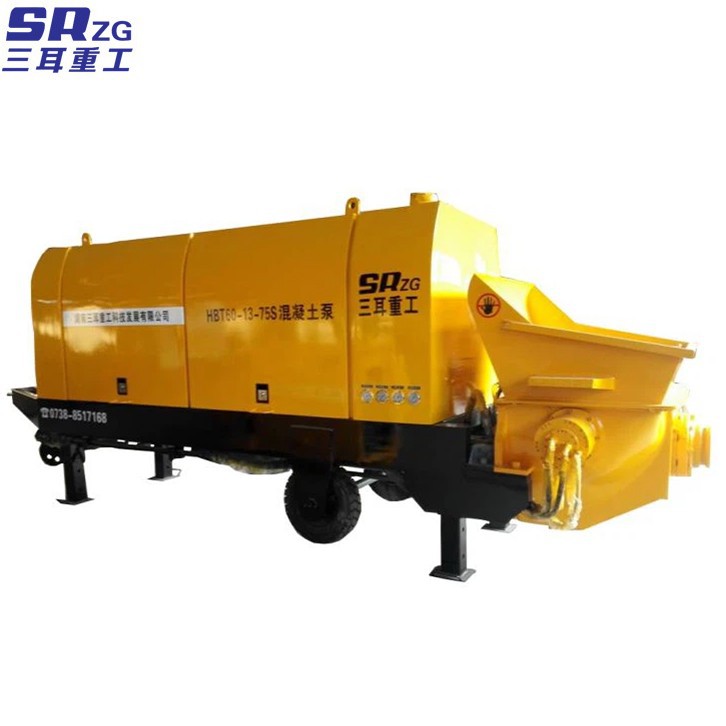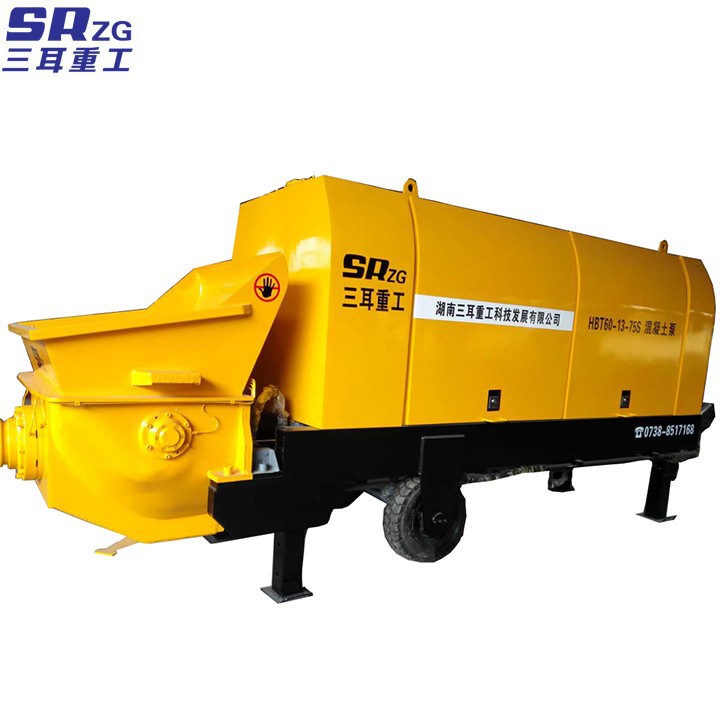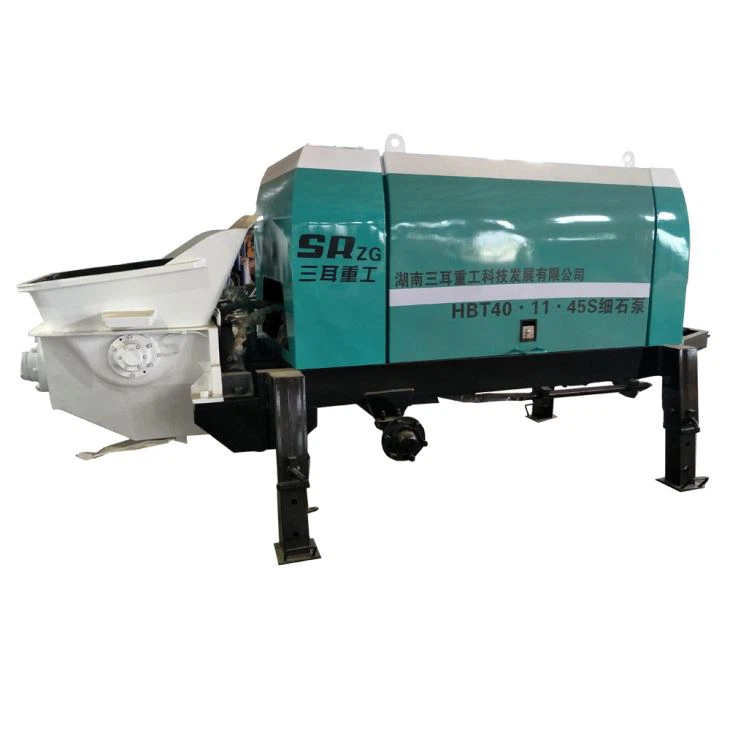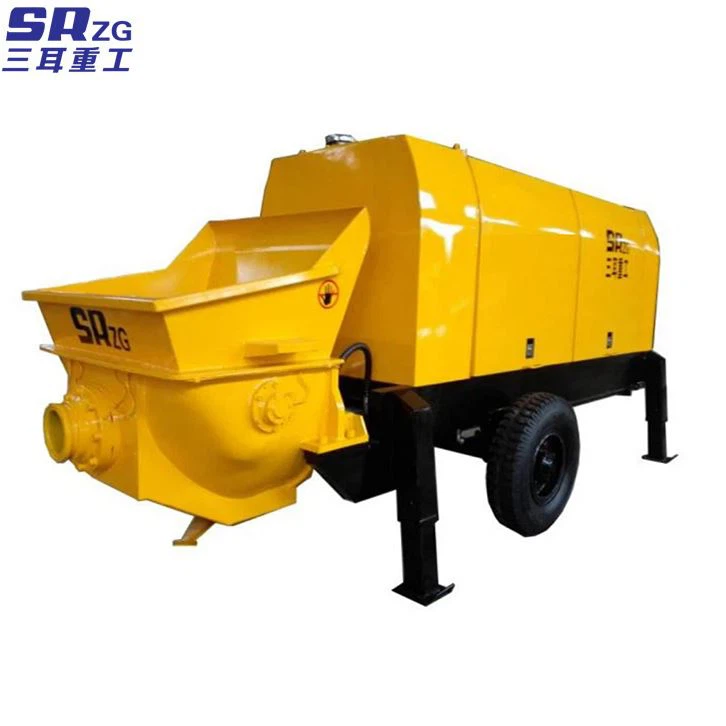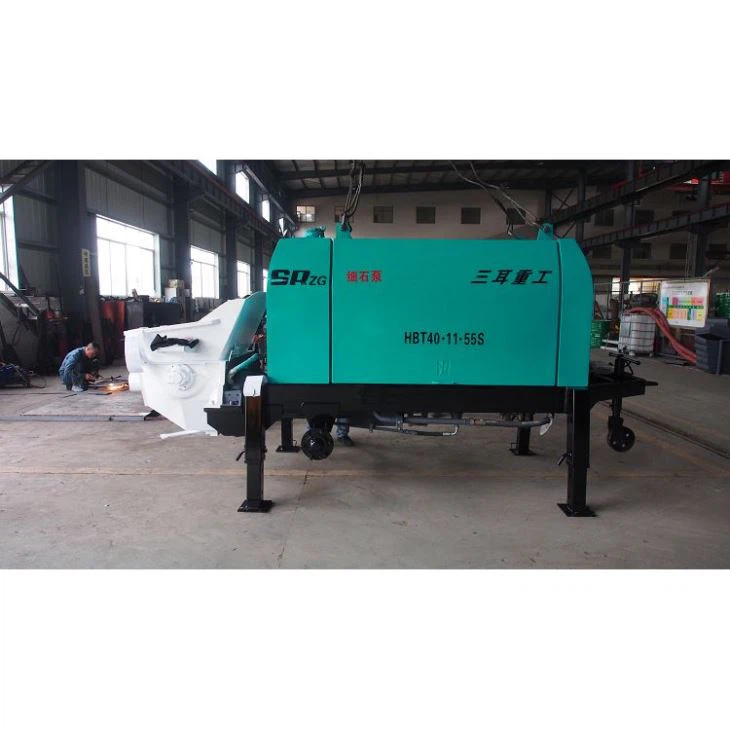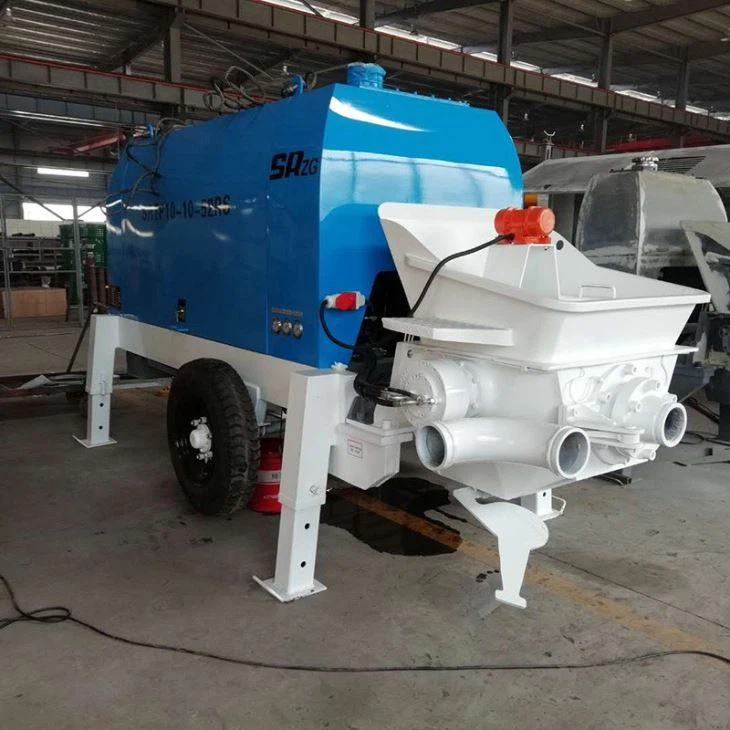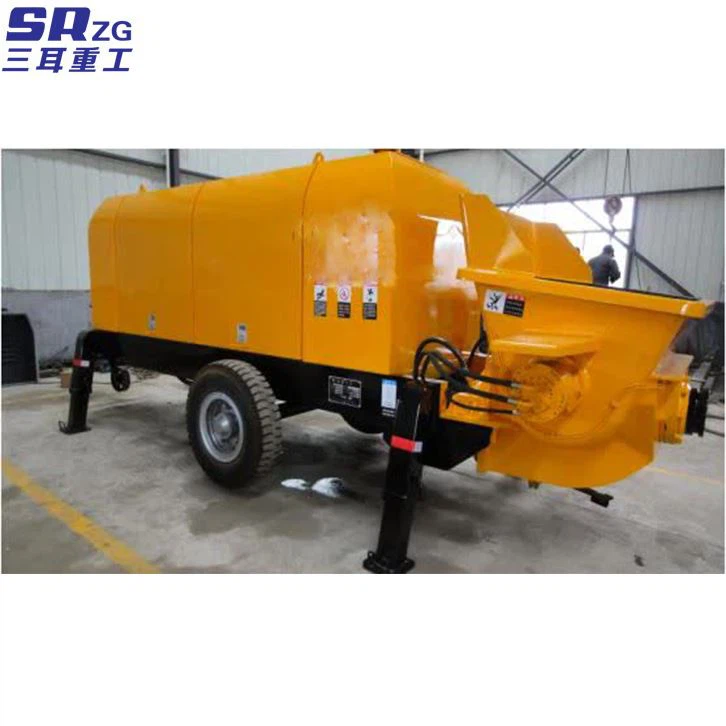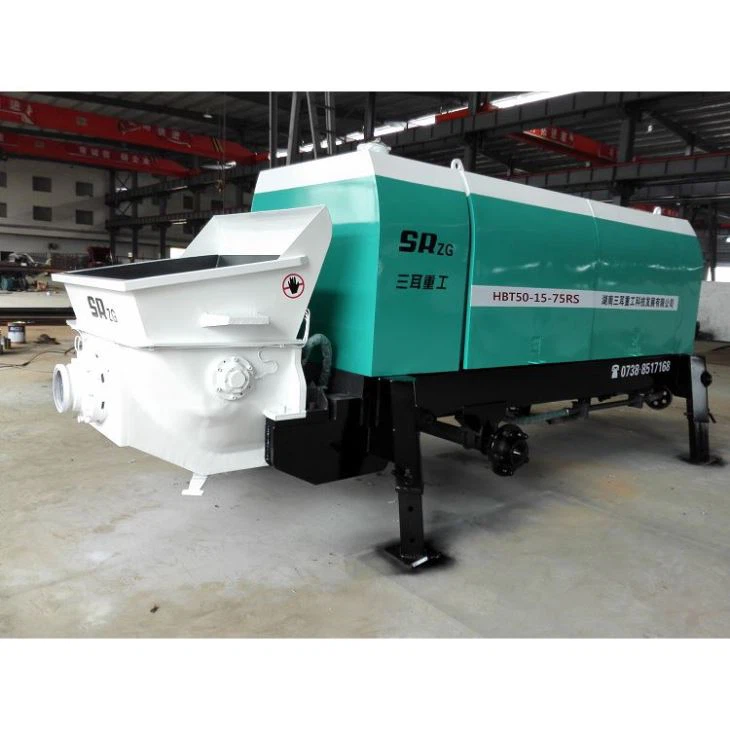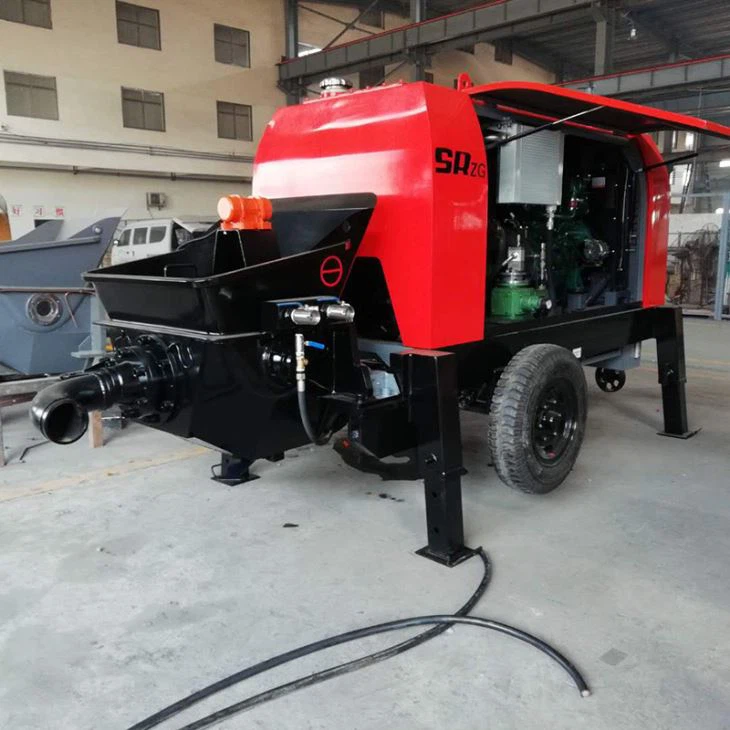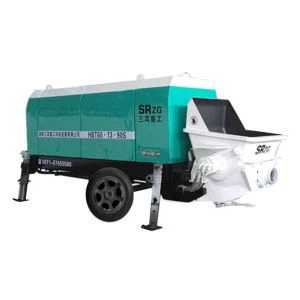
Small Portable Mobile Concrete Pump

Small Portable Mobile Concrete Pump

Small portable mobile concrete pump factory.Established a group of highly skilled after-sales service teams, including experienced engineers and senior technicians. We also gain multiply national invention patents.
Send Inquiry
Product Introduction
SRZG: Your Professional Mobile Concrete Pumps manufacturers!

Hunan Saner Heavy Industry Technology Development Co.,LTD. was founded in 2010. We supply a wide range of products, as concrete pump, tunnel wet concrete sprayer machines, mortar spraying machines, concrete conveyor pump, concrete mixer and pump machines, soil hydro seeding machines.


MODEL: HBT60-13-75S/130RS
Max theoretic output 68m³/h
Max concrete pumping pressure 7-13 Mpa
High and low valtage switchover Yes
Hydraulic system Double pump & double circuit opening
Main oil pump discharge 224ml/r(kawasaki)
Hydraulic system pressure 32MPa
Power supply Electric motor Diesel motor
Voltage 380V /
Motor power 75KW 130KW
Motor speed 2100r/m
Distribution valve type S pipe valve
Concrete conveying cylinder bore/stroke Ф200/1650mm
Oil cylinder bore/stroke Ф125/1650mm
Max aggregate size 40mm
Hopper Volume 600L
Feeding height 1450mm
Max delivery vertical distance 130m
Max delivery horizontal distance 400m
Concrete slump 160-230mm
Hydraulic oil tank volume 420L
The radiator cooling type Air cooling system
Hydraulic pump type Ram pump
Outer dimensions(L*W*H) 6100×2000×2130mm
Total weight 5500 kg

Experienced Team

Established a group of highly skilled after-sales service teams, including experienced engineers and senior technicians. We also gain multiply national invention patents.


Good Service

Our engineers also can serve abroad and 1-year warranty for any machine purchased from us. Moreover, we can offer training about how to use and maintenance with the machine.

Quality Assurance

We perform strictly according to the ISO9001 quality system in the whole process.

Reasonable Price

We offer competitive price to achieve win-win.


small portable concrete pump For Sale Display


product-730-730

Mini Concrete Pump

Our Mini Concrete Pump is equipped with an advanced hydraulic system which can be powered by a diesel engine or electric motor for your selection. It is of high efficiency.

product-730-730

Concrete Grout Pump

A Concrete Grout Pump, also known as a concrete conveying pump, consists of a pump body and conveying pipe. It is a kind of machinery that uses pressure to continuously transport concrete along pipes. It is mainly used in building construction, bridges, and tunnel constructions.

product-726-726

Trail Portable Concrete Pump Crete

Mobility: Portable concrete pumps are designed for easy transportation around a construction site. They may be mounted on trailers, skids, or wheeled frames, making them mobile and adaptable to various job site conditions.

product-730-730

Mobile Concrete Pump

The Mobile Concrete Pump produced by our company has large flow, wide adaptability, high efficiency, good wear resistance, easy operation and is very energy-saving. It is widely used for concrete pumping in house construction, elevated roads, bridges, tunnels, and other construction projects.

product-730-730

Tunnel Shotcrete Equipment

Tunnel shotcrete equipment Item- tunnel shotcrete equipment, concrete sprayer pump,shotcrete sprayer A5 is a piston type wet type shotcrete machine for the market demand.?The use of advanced "S" for the valve, and it is suitable for the dense concrete conveyor. This pump fill the small concrete.

product-726-726

Trail Mobile Concrete Pump Crete

Trail Mobile Concrete Pump Crete is a convenient, flexible and highly mobile concrete delivery equipment. It can adjust the output concrete flow and pressure in real time to adapt to different working conditions and large conveying distances.

product-730-730

Ready Mix Concrete Pump

Ready Mix Concrete Pump is a composite pumping equipment that continuously transports concrete to the pouring site through horizontal or vertical pipes. It is widely used in secondary post-filling, floor heating projects, roofs, walls, etc.

product-730-730

Truck Mounted Concrete Pump

In order to meet the fluidity requirements of concrete construction, our factory launched the Truck Mounted Concrete Pump. With excellent performance, reliability, mobility, and aesthetics, this concrete transfer pump is becoming the first choice for concrete machinery users.

product-730-730

Mine Shotcrete Equipment

Mine shotcrete equipment Item- mine shotcrete equipment,concrete stucco sprayer,concrete spray devices A5 is a hydraulic pump with the Piston power, especially suitable for artificial sprayed concrete, concrete pumping and pressure grouting, the new soil Spraying, mortar spraying.

mini concrete pump(002)

High Pressure Concrete Pump

High Pressure Concrete Pump can transport concrete from one location to another for fast concrete construction. Among them, the high-pressure pump plays an important role in compressing the concrete and pushing it to the tower jet machine.

Largest Concrete Pump

Largest Concrete Pump

The main function of Largest Concrete Pump is to pump concrete into concrete structures. It can provide the necessary height and flow to ensure the smooth progress of the project. At the same time, the automatic lubricating oil system protects the lubrication system of the pump and reduces the failure rate of the pump.

peristaltic concrete pump(002)

Fixed Concrete Pump

Fixed Concrete Pump is a type of pumping equipment widely used in building construction. It can deliver concrete to different locations of the building, such as floors, walls, columns, beams, etc. A high-pressure delivery pipeline means it can transport concrete to higher heights and longer distances.


Introduction to small portable concrete pump

A concrete pump is a machine used for transferring liquid concrete by pumping. Concrete pumping is a method used to place concrete in a specific location. During this process, a mixing truck transfers liquid concrete from a hopper to a concrete pump. The liquid churns continuously to avoid premature solidification.

Trail Stationary Concrete Pump Depot


Types of small portable concrete pump


Line Pumps
Line pumps transport liquefied concrete through underground hoses to their final destination. The mobility of hoses allows them to wind around corners and down alleyways where the truck otherwise wouldn't fit. There are several types of line pumps, some of which are listed here.

Stationary Pumps
The most elementary kind of concrete pump is the stationary pump or trailer-mounted pump. It's just a pump on the back of a trailer. Transporting this pump to the construction sites requires a dedicated vehicle. In the same way, a stationary pump lacks a boom; thus, additional pipes or positioning hoses are required to transport the concrete to its final destination. To get the concrete exactly where it needs to go, you'll also need a putting boom.

Truck-Mounted Static Pump
Workers may simply load up the static pumps that are attached to the back of their trucks and drive them to the construction sites. However, since these trucks don't have placement booms, you'll need to utilise additional placement hoses to transport the concrete to the desired spot.

Truck Mixer Pump
Concrete may be pumped straight from this model's mixer, which also functions as a pump. Although this strategy may be effective in many contexts, it does need a work site configuration that permits a big mixing truck to be driven up near the location where the concrete needs to be delivered.


Boom Pumps
The concrete is pumped using a boom pump that stretches into the air to reach the desired location. Like a crane, it uses a long, adjustable arm that can be extended into the air with the push of a button. In regions that are difficult to access and where a line pump is unable to reach, including the upper levels of a high-rise building or an apartment building, boom pumps may be utilised instead.

They may also extend beyond the boundaries of a home's property, making them ideal for building things like in-ground pools and other yard ornaments. The boom may be easily stored and transported when folded into manageable halves. Concrete can be placed precisely where it has to go with this type of pump without the need for additional hoses. Because of their adaptability and convenience, boom pumps are widely used in the construction industry.


Advantages of small portable concrete pump
 

Fast Concrete Placement
Both domestic and commercial projects can be time sensitive. No one wants to waste time where it can be saved under any circumstances and this is especially true when you're trying to build something. When you transport concrete by bucket or wheelbarrow, you are undoubtedly wasting time. It's slow because half of the journey is always spent coming back with an empty vessel to refill. This isn't the case with pumping, however, where you get fast concrete placement in one easy and efficient service. That means you can keep any other work relying on concrete on schedule.


Reduced Labour Cost
An added bonus of swift, tidy concrete pumping in the commercial sector is the reduction in labour costs because you won't need to use multiple workers to ferry concrete to the pour site. Instead, that valuable labour can be put into other areas of the project to move things along. Across multiple projects, you could save valuable hours and increase your profit margin.


Improved Accuracy
In the construction of anything, from a garden wall to a high-rise building, nothing should be left to chance. You can ensure the consistency and accuracy of the work you do with concrete pumping, knowing you get the same mix of concrete in one batch as well as a better idea of how long it will take to complete the job.


Help Improve Concrete Strength
Concrete pumps require less amount of water compared to other concrete pouring techniques. This helps prevent concrete from getting the shrink or seeing cracks once set-up. And this ultimately preserves the concrete's inherent strength. Stronger concrete structures incur less repair and maintenance costs in the long term.


Application of small portable concrete pump


Trail Stationary Concrete Pump Depot

Slab Building Foundations

Solid foundations are essential to prevent cracking and sagging. Concrete pumps ensure work moves quickly and smoothly so concrete ends up where it should go without imperfections.

High-Rise Buildings

Boom pumps are essential to reach greater heights, allowing you to lift concrete to high floors safely and quickly, so your project remains on schedule.

Highway Overpasses and Tunnels

Concrete pumps help you create a durable and reinforced final product that can support extensive weight. Boom pumps also allow you to reach required elevations more easily.

Bridges and Dams

Boom pumps can help you reach the necessary height for bridges or dams while creating robust and steady support that can handle vehicles and water pressure.

Sidewalks and Driveways

Boom pumps can help create a smooth and stable driveway or sidewalk, which can help improve a home's curb appeal.

Patios and Garden Shed Foundations

Concrete pumps allow workers to reach backyards, helping them quickly pour stable concrete slabs for shed foundations and patios without having to drive into the yard.


Main Components of small portable concrete pump


Trail Stationary Concrete Pump Depot
Trail Mobile Precision Concrete Pump Pumping

Main Pump Circuit
The primary pump circuit is one of a concrete boom pump's most crucial parts. This circuit controls the parallel hydraulic drive cylinders and features the following components - piston pump, motor, valve manifold, throttle control, cycling circuit, material cylinders, and relief valve.

S-Tube Shift Circuit
This circuit controls the function for shifting the S-tube from one cylinder to the other during pumping. As there's a single outlet for pumping material, there must be a method to transfer concrete from the cylinder to the outlet and then onto the delivery line.

Auxiliary Circuit
The agitator's hydraulic function is part of the auxiliary unit. The circuit controls the operation of the agitator and other additional equipment. The agitator rotates to mix the concrete in the hopper and feed the cylinders. The tandem pump on the main circuit serves the auxiliary circuit. A solenoid cartridge or dump valve is a safety mechanism to prevent flow to the auxiliary circuit when the operator activates the emergency stop circuit. One of the most significant functions of the auxiliary circuit is to assist in pumping concrete high in the air and over long distances.

Spraying Arm
The spraying arm positions the concrete flow at the correct location. Telescopic elevation platforms and scaffolding are unnecessary, as the component can spray for distances up to 56 feet. The spraying head mixes concrete, elevators and air. The nozzle dimensions and overall design are vital for ensuring minimal rebound and correctly incorporating the concrete.

Air Compressor
The air compressor gives the concrete the kinetic energy to spray and compact. A specific velocity is necessary for shotcrete to impact the site's surface, achieved with the compressor's airflow and the correct nozzle diameter.

Motorized Chassis
The motorized chassis transports the concrete pump to the desired location. The chassis design is crucial, as it needs to be able to turn in relatively small spaces and operate on uneven terrain.


Maintenance Tips for small portable concrete pump
 

Check the oil level of hydraulic oil. The hydraulic oil level should be kept above three-fourths of the oil level gauge, otherwise it should be filled with clean hydraulic oil of the same brand. It is recommended to clean the hydraulic oil with a filtration device with a filtration precision of 20μ.


Check the oil quality. After stopping the machine for 30 minutes, use a clean measuring cup to catch 0.5 liters of oil. The oil should be clear and light yellow. If the oil is highly contaminated or appears emulsified or cloudy, or if there is sediment at the bottom after sitting for several hours, the oil should be changed immediately.


The lubricant tank should be filled with grease and the water tank should be filled with fresh water.


Remove the water tank cover and check whether the concrete piston is well sealed and no mortar seeps into the water tank.


Check the gap between the cutting ring and the glass plate. Check the condition of the worn parts after each time the equipment is used and thoroughly cleaned. When the gap between the glass plate and the cutting ring local is greater than 1 mm, the gap should be adjusted. When the gap is greater than 2 mm, the cutting ring should be replaced.


Check the working condition of the lubricating system, whether there is lubricating oil overflowing at the lubrication points such as the bearing position of the S-tube swing arm end and the bearing position of the mixing shaft.


Check the swing of the distribution valve, and whether the forward and reverse rotation of the stirring device can work normally. (This item requires power-on inspection. After the inspection is completed, turn off the equipment and then carry out maintenance work for other items.)


Check that the outside of the cooler is clean. If there is dirt, it should be cleaned immediately, otherwise it will easily cause the oil temperature to overheat.


Check the wear of the concrete pipelines by tapping on them, and check that the line joints are well sealed.


Check the hydraulic system and diesel engine for oil leakage, oil seepage and water leakage.


Check whether the function of each electrical component is normal, check whether all circuit connectors are dry, and whether there is oxidation or looseness. If necessary, spray damp proofing agent on these joints.


Check accumulator. The accumulator surface should be kept dry and clean. Oxide and dirt on accumulator and accumulator terminals can cause short circuits, voltage drops and discharges, especially in wet environments. Operators can use a copper wire brush to remove oxide from accumulator terminals and cable splices. Tighten cable splices and coat with protective grease or petroleum jelly.


Questions to Help You Narrow down Your Concrete Pump Choices


What is the Distance from the Concrete Delivery Area to the Placing Location?
The distance from the concrete delivery area (where the ready-mixed concrete trucks will park) to the placing location, will determine the size of the boom to be used on a truck-mounted concrete pump. Horizontal distances as well as above or below-ground spots can be reached by a concrete pump boom, making this equipment not only flexible but an essential tool within the construction industry.


Can the Pump Handle Your Concrete Mix?
Some types of trailer-mounted pumps are limited in the types of concrete mix they can handle. This is measured by the maximum aggregate size they can handle. While ball valve style trailer pumps are inexpensive, the maximum rock size they can handle is 3/8 inch pea gravel. For this reason, they are used primarily in regions where this is a lot of low-volume, small-rock concrete work. Other line pumps can handle concretes containing larger coarse aggregate (3/4- to 1 1/2-inch rock). Applications for heavier concrete include concrete slabs, shotcrete, and other concrete structures.


What Footprint is Needed for Setup?
Another important consideration in concrete pump selection is the footprint needed for the equipment set-up. There are many jobs that are limited in space such as busy urban areas. Contractors should look for a pump that uses the least area as possible, yet is still able to reach the desired pouring spots.


Are There Emissions Requirements to Consider?
Due to stricter emissions requirements on diesel engines, customers are seeing greater interest in electric-driven and gasoline-powered machines. Electric models are common in underground construction or industrial applications. Gasoline-powered concrete pumps are also trending upward.


What are the Maintenance Costs?
Ease of maintenance and wear parts prices are a concern for customers. Some additional features to evaluate are the simplicity of the design, accessibility to components that need to be cleaned or maintained, the quality of materials, warranty, and reputation. Once the concrete is hardened inside the pipes or any other element of the machine, the costs of repairs can easily skyrocket.


Is the Concrete Pump Easy to Operate?
With labor shortages expected to continue, manufacturers are doing what they can to make concrete pumping machines easier to operate. The control panel of some concrete pumps is very simple and intuitive, with three operation modes that make it easy for the operator to get out of difficult or even fail situations of the machine. Take advantage of equipment training offered by the manufacturer and/or dealer. Truck-mounted concrete pump operators need to evaluate whether the ground conditions are stable enough for the machine to operate, need to stay clear of overhead power lines, and determine if the mix is suitable for the pour.


Ultimate FAQ Guide to small portable concrete pump


Q: What are the precautions when charging the accumulator of a concrete pump?

A: 1. The liquid should be drained, or the unloading switch should be placed in the open position.
2. It should be inflated slowly. If the inflation speed is too fast, the high-pressure nitrogen will rapidly expand and cause rapid cooling, causing the skin to be cold and brittle or even rupture. In addition, if the inflation is too fast, it may cause the original folded skin to expand unevenly and rupture.
3. After inflating, you should wait a few minutes to stabilize the pressure, and then check the inflation pressure.
4. After inflation, soapy water can be used to check the air tightness of the valve.
5. After inflation, in the initial stage of use, follow-up should be strengthened to facilitate timely detection of insufficient air pressure.

Q: Is pumping concrete better than pouring?

A: A concrete pump uses material cylinders and hoses to deliver concrete to a specific area. A concrete pump is far more efficient in terms of the time required to pour and the amount of labor required to manage the pour. Chute delivery is very labor intensive.

Q: How long does it take to pump concrete?

A: Some machines can pump 1m³ of concrete per minute, greatly reducing the amount of time you would spend.

Q: What preparation is required to pump concrete?

A: Parking for both our concrete mixer and the truck-mounted concrete pump is required. A pathway for the pump line should be prepared so the operator knows roughly where to set up the pipe. Door frames, garden walls, etc., will have pipelines laid over them and should be protected with dust sheets and padding.

Q: What is the maximum distance that a portable concrete pump can reach?

A: Ground line hydraulic pumps can shift concrete at 1 m³ each minute and can extend to a distance of around 150 meters, in order to reach the pour site.

Q: Can portable concrete pumps handle different types of concrete mixes?

A: Yes. They can handle various types of concrete mixes, including those with additives or admixtures.

Q: What is the maximum concrete output of a portable concrete pump?

A: Basically, its concrete output can each from 80 m³/h to 180m³/h.

Q: What is the range of a concrete pump?

A: Short concrete placing boom pumps reach < 30 meters. Long concrete truck boom pumps reach 30 – 60 meters. Super long concrete boom trucks reach > 60 meters.

Q: How does a portable concrete pump work?

A: Concrete pumps use a simple, reliable mechanism for transporting concrete. Two cylinders are placed next to one another. Inside each cylinder is a piston: one piston draws the concrete into the cylinder, while the other pushes the concrete out.

Q: What is a mobile concrete pump?

A: It is also known as a Truck Mounted Mobile which includes both a concrete pump and a placing boom attached to a truck chassis. Turning up at a job and pumping concrete efficiently and quickly is the major advantage of a mobile pump which makes it suitable for the widest range of construction projects.

Q: What kind of maintenance is required for a portable concrete pump?

A: Operators should ensure that they grease the boom once a week and perform a visual check of the boom and pipework. Most concrete pumps are fitted with an auto-lube system that automatically greases all parts that need lubrication.

Q: What is the lifespan of a portable concrete pump?

A: The reliable statement is that the design life of a concrete pump truck is about 10 years.

Q: How to inspect for worn pipelines?

A: The most accurate way to inspect for worn pipelines is with a gauge specifically designed to measure the thickness of steel pipe. In addition, the pipe ends must be inspected for cleanliness, wear, and compatibility.

Q: What are the limitations of concrete pumps?

A: If the mixture is too thick or has low workability, it may not flow smoothly through the pump's pipeline, reducing its overall pumping range. Similarly, if the concrete contains large aggregates that could clog or obstruct the pipeline, this may limit how far it can be pumped.

Q: Can a portable concrete pump be used in sub-zero temperatures?

A: It is not suggested to mix concrete in temperatures below 35°F, although it can be done with water heated to no more than 170°F in the mixer.

Q: How to pump concrete on high-rise buildings?

A: Boom pumps are large, truck-mounted pumps that feature a robotic arm, or 'boom', which extends and maneuvers to deliver the concrete precisely where it's needed. These pumps are ideal for high-rise construction projects or sites where access is limited.

Q: Are portable concrete pumps easy to set up?

A: Mobile pumps mean a far quicker setup time. All that you need to do is place the boom and set up the outriggers. Then the pump can deliver concrete within an hour!

Q: Can portable concrete pumps be used for underwater concrete placement?

A: Yes, some portable concrete pumps are equipped to handle underwater concrete placement.

Q: Can portable concrete pumps be used for vertical pumping?

A: Yes, it can continuously horizontally or vertically convey concrete.

Q: How do concrete pumps get cleaned?

A: The first option (water) is the most recommended because it is more effective and safe. Fill the hopper with water and put a foam ball in one end of the line, so that when pumping, it runs through the line and sweeps out the remaining material.

Q: What is the importance of concrete pumps in construction?

A: The use of concrete pumps offers several advantages in construction. Firstly, they provide a faster and more precise method of concrete placement compared to traditional methods, such as using wheelbarrows or cranes. With a concrete pump, the concrete can be efficiently pumped to hard-to-reach areas, such as high-rise buildings or underground structures, saving time and effort. Moreover, concrete pumps minimize the risk of segregation and slump loss, as the concrete is pumped directly from the mixing plant to the desired location without any delay. This ensures a uniform and consistent quality of the concrete, enhancing the overall durability and strength of the structure. Additionally, the controlled placement of concrete reduces waste and allows for better utilization of resources, resulting in cost savings. Concrete pumps also play a crucial role in improving worker safety. By eliminating the need for manual handling of heavy concrete materials, they reduce the risk of injuries and accidents on the construction site. This not only protects the workers but also ensures that the project progresses smoothly without any disruptions. Furthermore, concrete pumps enable construction projects to meet tight deadlines. With their efficient pumping capabilities, large volumes of concrete can be placed within a short period, allowing for faster construction progress. This is particularly beneficial in projects with strict timelines, such as infrastructure development or commercial building construction. In addition to their efficiency and safety benefits, concrete pumps also contribute to environmental sustainability. By reducing the need for excessive transportation and minimizing material wastage, they help in conserving natural resources and reducing carbon emissions. This aligns with the growing emphasis on sustainable construction practices.

Q: What are the factors to consider when choosing a concrete pump?

A: Size of the Project
The size of the project plays a vital role in determining the type and size of the concrete pump required. For larger projects with substantial concrete requirements, boom pumps are more suitable. These pumps are equipped with long, extendable arms, allowing them to reach great heights and cover large distances. They are ideal for high-rise buildings, bridges, and other large-scale constructions. On the other hand, for smaller projects, line pumps may be sufficient. Line pumps are more compact and maneuverable, making them suitable for tight spaces and projects with lower concrete volume needs. They are commonly used for residential construction, small commercial projects, and concrete repairs.
Nature of the Work
The nature of the work also influences the choice of a concrete pump. Consider the accessibility of the construction site, the height and distance the concrete needs to be pumped, and any specific requirements unique to the project. For example, if the construction site has limited access, such as narrow alleyways or tight corners, a trailer-mounted pump may be the best option. These pumps can be easily transported to the site and set up in confined spaces. They are commonly used for small-scale projects, such as home renovations and landscaping. Additionally, if the concrete needs to be pumped to great heights or over long distances, a high-pressure pump may be required. These pumps are capable of delivering concrete vertically or horizontally with great force, ensuring it reaches the desired location without any loss in quality or consistency.
Budget Constraints
Budget constraints play a significant role in selecting a concrete pump. Consider the upfront cost of the pump, maintenance and operational costs, and potential return on investment. It is crucial to strike the right balance between cost and functionality. While boom pumps and high-pressure pumps may offer advanced features and capabilities, they often come with a higher price tag. It is essential to evaluate whether the benefits they provide outweigh the additional cost for your specific project. Furthermore, consider the long-term costs associated with maintenance and operation. Some concrete pumps require more frequent servicing and replacement of parts, which can add to the overall expenses. On the other hand, investing in a reliable and efficient pump may result in higher productivity and cost savings in the long run.

Q: What concrete pumps are available?

A: There is a wide range of concrete pumps available, and our experienced staff and technicians can assist you in finding the pump that suits your company's needs. Truck-mounted concrete pumps are typically ground-based and are suitable for projects requiring high concrete output. Trailer-mounted concrete pumps are more maneuverable and better suited for challenging work sites. Trailer-mounted boom concrete pumps combine maneuverability with the ability to deliver high volumes of concrete to vertical locations up to 65 meters above the pump.

Q: What are the most common problems with concrete pumps?

A: The most common issue with concrete pumps is clogging, which typically occurs when the concrete is not adequately hydrated or when the pump hasn't been cleaned and maintained correctly. Regular routine maintenance and cleaning are essential to keep your concrete pump in good working condition and ensure its safety.

Hot Tags: small portable mobile concrete pump, China small portable mobile concrete pump manufacturers, suppliers, factory, Ready Mix Concrete Pump, Largest Concrete Pump Truck, High Pressure Concrete Pump, , Trailer Mounted Concrete Pump

Send Inquiry

whatsapp

skype

E-mail

Inquiry